
Quotation


Performance
Product Design Seminar Simultaneous Interpretation | Product Design · UX Strategy · Design Innovation Seminar – UNIVERSE RB
- 2025.09.19
AI & Digital Transformation
Category Description
This category covers interpretation cases related to AI adoption, industrial
automation, data-driven decision-making, and digital transformation
technologies.
UNIVERSE RB provides integrated services including:
Simultaneous interpretation Consecutive interpretation Technical seminar interpretation AI-assisted caption support QMS-based quality management operations
We support technology seminars, industry forums, and digital innovation conferences with stable and professional interpretation environments.
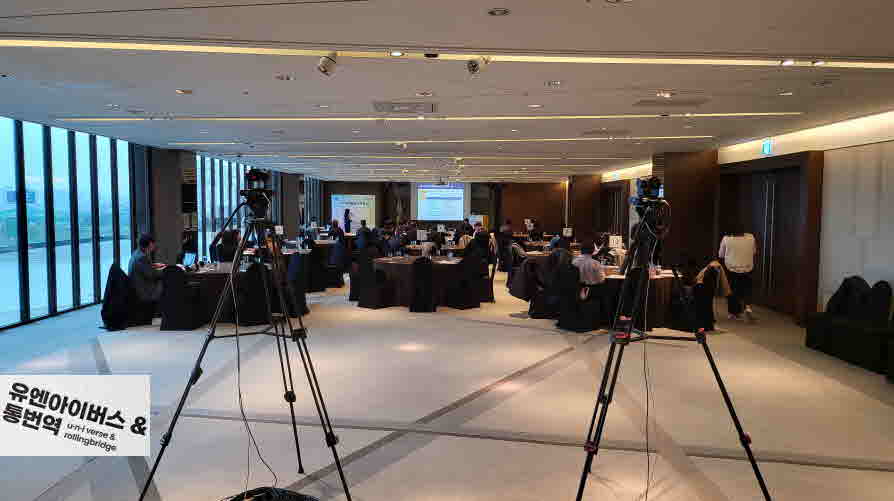
Executive Summary
The Product Design Seminar is an interdisciplinary international forum integrating industrial design, UX and UI innovation, sustainable materials, digital engineering tools, and brand strategy.
Participants include:
-
Industrial and product designers
-
Manufacturing companies
-
IT and software developers
-
Academics and design researchers
-
Marketing and branding professionals
Interpretation in this environment requires balancing creative philosophy, technical design processes, and commercial strategy while maintaining clarity and aesthetic nuance.
AI-supported terminology alignment assists structured digital-tool sessions, while human interpreters manage conceptual nuance, creative tone, and brand-sensitive messaging under a structured quality management approach.
1. Event Overview
The seminar covered innovation at the intersection of design, engineering, and business strategy.
Sessions addressed:
-
Human-centered product development
-
Sustainability and eco-conscious material innovation
-
Digital design systems and simulation platforms
-
Global branding and localization strategies
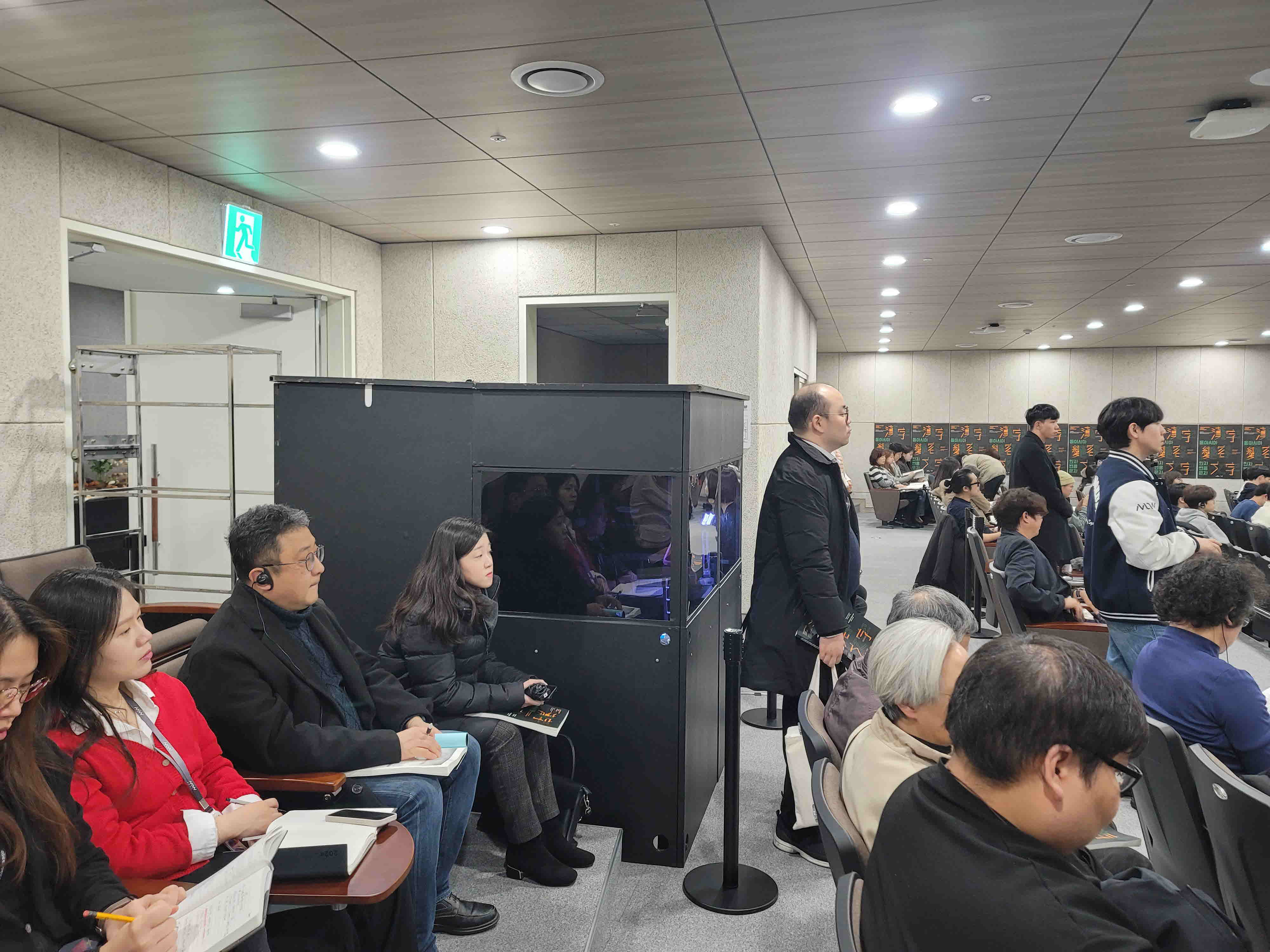
Simultaneous, consecutive, and on-site interpretation formats were deployed depending on session structure and interaction intensity.
2. Key Topics Interpreted
2.1 User-Centered Design
-
Human-centered product development
-
Design thinking methodology
-
Usability testing and prototyping cycles
-
Emotional and experiential design
2.2 Sustainable Design
-
Eco-friendly material innovation
-
Circular design principles
-
Lifecycle assessment concepts
-
Carbon-conscious product strategies
2.3 Digital Design Tools
-
Digital twin modeling
-
3D printing and additive manufacturing
-
AR and VR-based simulation
-
AI-assisted generative design workflows
2.4 UX and UI Innovation
-
Interface usability metrics
-
Cross-platform design systems
-
Accessibility standards
-
Interaction design principles
2.5 Brand Strategy Integration
-
Design-driven brand positioning
-
Localization of product aesthetics
-
Global versus regional market adaptation

3. Interpretation Formats
Simultaneous Interpretation
Used for:
-
Keynote speeches
-
Global design trend forums
-
Design philosophy sessions
Provides uninterrupted delivery in large-scale events.
Consecutive Interpretation
Used for:
-
Panel discussions
-
Corporate case studies
-
Academic and industry collaboration talks
Allows contextual clarification during dialogue-based sessions.
On-Site Practical Interpretation
Used for:
-
Product demonstrations
-
Design workshops
-
Cross-company collaboration meetings
Requires fast adaptation to visual materials and physical prototypes.
4. Required Competencies
-
Strong understanding of design theory and UX and UI methodology
-
Familiarity with emerging technologies including 3D printing and digital twins
-
Linguistic flexibility to convey abstract and conceptual ideas
-
Accurate handling of branding and global-market terminology
-
Ability to synchronize with image-heavy presentations and demo videos
Design interpretation is not purely technical; it demands expressive clarity and conceptual sensitivity.
5. Representative Case Examples
Milan Design Week Seminars
Simultaneous interpretation for global design trend discussions.
Focus on conveying creative philosophy and brand positioning nuance.
IDEO Design Innovation Workshop
Interpretation for user-centered design case studies and collaborative ideation sessions.
Maintained clarity in abstract design-thinking concepts.
Seoul Design International Forum
Sessions on sustainable materials and circular design strategies.
Ensured accurate alignment of engineering and artistic terminology.
Apple and Samsung UX Seminars
Interpretation for UX and UI innovation presentations.
Handled interface design metrics and experiential design discussions.
3D Printing and AR VR Design Conferences
Digital tool-based design practice interpretation.
Managed technical explanations of additive manufacturing and immersive modeling.
6. Key Interpretation Considerations
Terminology Accuracy
Examples:
User-Centered Design → 사용자 중심 디자인
Design Thinking → 디자인 사고
Digital Twin → 디지털 트윈
Precision ensures conceptual consistency.
Visual Synchronization
More than 70 percent of sessions rely on:
-
Slides
-
Diagrams
-
Demo videos
-
Prototype showcases
Interpretation must align closely with visual progression.
Creative Nuance
Design language often carries:
-
Emotional tone
-
Conceptual abstraction
-
Aesthetic philosophy
Literal translation is insufficient; expressive adaptation is essential.
Industry and Artistic Balance
Presentations combine:
-
Engineering processes
-
Artistic perspective
-
Business strategy
Interpretation must maintain equilibrium across these dimensions.
7. Risk Factors
High-risk segments include:
-
Brand positioning language
-
Technical demonstration timing
-
Visual-heavy rapid explanations
-
Cross-disciplinary terminology overlap
Misinterpretation may affect:
-
Brand perception
-
Product positioning clarity
-
Market messaging
-
Collaborative outcomes
In large-scale international seminars, stable multilingual communication is achieved when interpretation systems, technical equipment, and interpreter operations are designed as an integrated architecture.
8. Conclusion
Product Design Seminar interpretation is interdisciplinary creative-technical communication management.
It requires:
-
Design literacy
-
Technical awareness
-
Branding sensitivity
-
Visual synchronization capability
-
Linguistic flexibility
In design-driven environments, interpretation must preserve creativity while ensuring conceptual precision and strategic clarity.
This
case represents one of the seminars or forums discussing the industrial
application of AI technologies.
AI technologies continue to expand across manufacturing, data analytics, and
automation systems through real-world implementation.
→ View AI & Digital Transformation Cases
https://universerb.com/en/11_en/12?page=45
https://universerb.com/en/11_en/110?page=39
The case archive on this
website is based on interpretation and global communication experiences
conducted in international seminars, policy forums, corporate presentations,
and industry conferences.
To comply with client confidentiality and the Code of Professional Conduct,
some event details are described in a generalized manner.