
Interpretation


Remote Interpretation
Remote Interpretation Quality Is Driven by
System Architecture, Not the Platform
AI translation quality is determined by operational design and infrastructure, not by technology alone
For pricing, equipment setup, and technical requirements,
please contact us at blue@universerb.com.
Zoom Simultaneous Interpretation
Zoom supports large-scale events with professional streaming and interpretation systems, scaling up to 1 million participants, with approximately 800 recommended for stable operation.
Remote Interpretation System Architecture
- Stable real-time multilingual delivery through multi-track audio and dedicated interpretation channels for each language
- Integration of AI-powered technology with professional interpreters’ judgment and accountability through an AI–Human Hybrid framework
- Tailored remote interpretation system design supported by dedicated networks and professional audio infrastructure
-
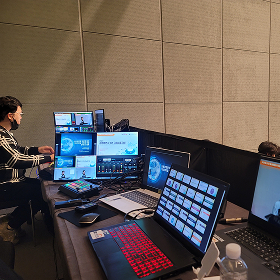
System Configuration
-
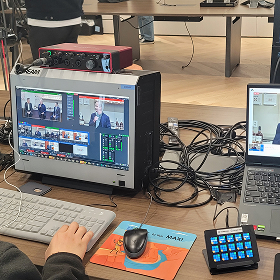
Monitor Display
-
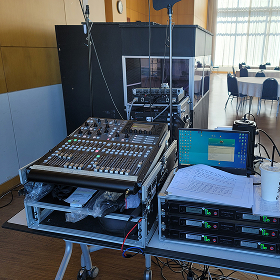
On-site Standby
-
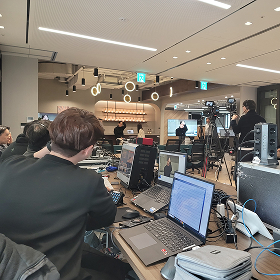
System Operation
FAQ
-
Q1. How Accurate Is UNIVERSE RB’s AI-Powered Interpretation?
- AI interpretation accuracy depends not only on the technology itself, but also on audio quality, audio infrastructure, specialized terminology, and system design.
- Through our AI–Human Hybrid framework, UNIVERSE RB combines AI-powered technology with professional interpreters’ judgment and quality management, targeting accuracy levels of approximately 90% or higher under professionally managed audio and operational conditions.
※ Actual accuracy may vary depending on the language pair, speaking speed, audio environment, specialized terminology, and complexity of the event.
-
Q2. Is Professional Equipment Required for High-Quality Zoom Simultaneous Interpretation? Yes.
Interpretation quality depends more on audio equipment and network infrastructure than on the platform itself.
- Condenser microphone (20 Hz–20 kHz)
- Audio interface (24-bit / 48 kHz or higher)
- Audio mixer (2 channels or more)
- Wired LAN connection (20 Mbps+ upload speed)
This setup helps maintain stable real-time multilingual delivery and consistent audio quality.
-
Q3. How Is the Cost of Zoom Simultaneous Interpretation Determined?
Pricing varies depending on the event structure and operational requirements, including:
- Event duration and schedule
- Complexity of the subject matter
- Interpreter setup (solo or two-interpreter rotation)
- Platform operation and technical support
- Level of pre-event preparation and material review
The interpretation method and staffing are tailored to the event’s objectives and operational requirements, with an appropriate setup and estimated cost provided after consultation.
-
Q4. What Is the Difference Between Zoom Simultaneous Interpretation and a Standard Video Conference?
The key difference is the dedicated language-channel structure.
- Zoom simultaneous interpretation separates interpretation into dedicated language channels, enabling real-time multilingual audio
- Participants can select their preferred language channel and listen to interpretation in real time
- Standard video conferences without dedicated language channels have limitations in supporting multilingual simultaneous interpretation
※ In short, Zoom simultaneous interpretation supports multilingual meetings through dedicated language channels and a structured interpretation workflow.
Webex Simultaneous Interpretation
Meetings Requiring High Security and Confidentiality Standards
Used for meetings that require security management or for confidential sessions.
-
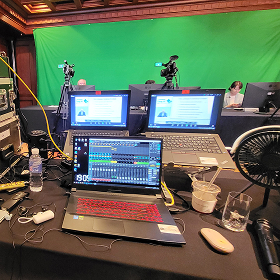
System Configuration
-
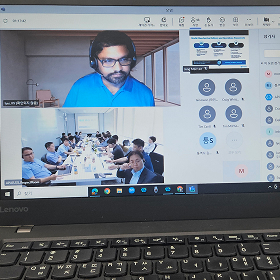
Monitor Display
-

On-site Standby
-

System Operation
FAQ
-
Q1. Are AI-Powered Translation Systems Available for Webex Meetings? Yes.
- AI translation quality depends less on the device itself and more on speech recognition accuracy, audio conditions, network stability, and system design.
- Integrated speech recognition and AI translation systems can provide real-time automated translation tailored to Webex meeting environments.
※ Even dedicated AI translation systems may vary in speech recognition accuracy depending on audio conditions, speaking speed, and specialized terminology.
-
Q2. What Is the Difference Between Webex and Zoom?
The key differences are accessibility, ease of operation, security, and account management.
- Zoom offers high accessibility and ease of use, making it well suited for international conferences, seminars, and webinars with external participants.
- Webex is well suited for corporate and public-sector meetings where organization-wide security policies and centralized account management are important.
The right platform should be selected based on the event’s purpose, participant structure, security requirements, and operational environment.
-
Q3. What Is the Difference Between Zoom and Webex for Simultaneous Interpretation?
The key difference is not the interpretation feature itself, but the event’s purpose and operational environment.
- Zoom supports dedicated language channels for meetings and webinars, making it well suited for international seminars and large-scale online events with external participants.
- Webex also supports dedicated interpretation channels and interpreter assignment, while Control Hub provides centralized management of users, permissions, and security policies, making it suitable for corporate and public-sector environments.
Rather than comparing platforms alone, the right choice should be based on participant structure, security requirements, account management, event scale, and technical operations.
-
Q4. What Is the Difference Between Zoom and Webex AI Translation?
Comparison Zoom Webex Key Strengths High accessibility and ease of operation Organization-focused security and account management Best Suited For International conferences, seminars, and webinars Corporate, public-sector, and security-sensitive meetings External Participant Access Relatively easy May be restricted by organizational policies Simultaneous Interpretation Dedicated language channels Dedicated language channels and interpreter assignment Large-Scale Events Well suited for events with many external participants Well suited for internal and invitation-based events Security Management Meeting-level security settings Centralized user and permission management Account Management Relatively simple to manage Enterprise account and policy-based management Selection Criteria Accessibility, participant scale, ease of operation Security requirements, account control, organizational environment ※ AI translation performance may vary depending on language pair, audio quality, speaking speed, specialized terminology, and system configuration.
Video Conference Platforms and Interpretation Types
-
Zoom · Webex · Microsoft Teams
Simultaneous Interpretation (Dedicated Language Channels)
-
Gooroomee & Other Video Conferencing Platforms
Consecutive Interpretation (Depending on Platform Capabilities)
-
Messaging Apps (KakaoTalk · WeChat, etc.)
Consecutive Interpretation (Primarily for Small Meetings)
Remote interpretation across Zoom, Webex, Microsoft Teams, and other platforms, with simultaneous or consecutive interpretation tailored to each platform and meeting environment.
| Platform | Simultaneous Interpretation | Consecutive Interpretation |
|---|---|---|
| Zoom | O | O |
| Webex | O | O |
| Microsoft Teams | O | O |
| Gooroomee | △* | O |
※ Simultaneous interpretation availability and operating methods may vary depending on the platform’s pricing plan, feature settings, and event environment.
- Remote interpretation quality is driven by audio architecture and operational design, not the platform itself
- Multi-track audio and an AI–Human Hybrid framework systematically manage AI translation risks
- Professional audio and network infrastructure ensure stable, real-time multilingual interpretation