
Quality


Quality Management (QMS)
A step-by-step QMS minimizes quality variation
and ensures consistency from pre-project analysis to post-project evaluation
Our step-by-step QMS systematically manages every factor affecting interpretation and translation quality—from pre-project analysis and expert selection to execution, review, and post-project evaluation—minimizing quality variation and ensuring consistency.
What Is the Quality Management Process (QMS)?
Interpretation and translation quality is managed throughout the process, not just in the final result.
From project intake and pre-project analysis to expert selection, preparation and review, on-site operations, and post-project evaluation, our step-by-step QMS ensures consistent quality and operational stability.
9-Step QMS Quality Assurance Process
| STEP | Quality Assurance Process | Key Quality Controls |
|---|---|---|
| 1 | Project Intake | Schedule · Language pair · Interpretation/translation mode · Event objectives · Client requirements |
| 2 | Project Complexity Analysis | Subject matter · Technical complexity · Communication structure · Risk assessment |
| 3 | Expert Selection | Experience · Subject-matter expertise · Relevant project experience · Project fit |
| 4 | Pre-Project Material Analysis | Presentation materials · Source content · Specialized terminology · Proper names · Numerical data · Key content |
| 5 | Terminology & Quality Standards | Terminology · Language conventions · Style guidelines · Client requirements |
| 6 | Preparation & Verification | Interpretation preparation · Translation review · Final schedule and technical environment check |
| 7 | Interpretation & Translation Delivery | Accuracy · Consistency · Clarity · Confidentiality standards |
| 8 | Quality Review & Monitoring | Errors · Terminology consistency · Omissions · On-site issues · Quality variation |
| 9 | Post-Project Evaluation & Improvement | Performance evaluation · Feedback integration · Project records · Continuous improvement |

What Is the QMS · AI Interpreter Quality Matching System?
Rather than relying solely on individual interpreter capabilities, our QMS and AI-assisted analysis systematically match each project with interpreters based on their expertise, experience, and skill level.
This approach minimizes quality variation and maintains consistent interpretation standards throughout the project.
QMS · AI Interpreter Quality Matching System
Systematic quality management for optimal matching between project requirements and interpreter expertise
| Category | Analysis & Management Factors | Application Criteria |
|---|---|---|
| Project Analysis | Event objectives · Subject matter · Project complexity · Operating environment | Assessment of project requirements and interpretation complexity |
| Interpreter Capability Analysis | Expertise · Experience · Skill level · Relevant project experience | Assessment of required competencies and project fit |
| QMS · AI Matching | Project requirements × Interpreter capabilities | Selection and assignment based on optimal fit |
| Quality Management | Preparation · Delivery · Review · Post-project evaluation | Systematic quality management beyond individual interpreter capabilities |
| Quality Outcomes | Accuracy · Consistency · Operational stability | Minimized quality variation · Consistent quality standards |
※ Our QMS and AI-assisted analysis minimize reliance on individual capabilities, reducing quality variation and ensuring consistent interpretation standards.
QMS · AI Interpreter Matching Simulation
Even among English interpreters, project suitability can vary.
UNIVERSE RB comprehensively analyzes project requirements—including subject-matter expertise, project complexity, interpreting mode, specialized terminology, and Q&A requirements—together with each interpreter’s expertise, professional experience, relevant project experience, and proficiency.
※ The Matching Score does not represent an interpreter’s absolute skill level or grade. The same interpreter may score 96 for a medical project but 78 for an IR project, while an IR specialist may score 98 for an investor meeting but lower for a medical seminar.
※ The scores below are simulated examples provided to illustrate how the QMS · AI Matching System works.
UNIVERSE RB MATCHING SCORE
Matching Scores are calculated through the QMS · AI system, followed by a final expert review to select and assign the best-fit professional for each project.
| Evaluation Criteria | Assessment | Weight |
|---|---|---|
| Domain Expertise | Expertise in the relevant industry, policy, medical, or technical field | 25 |
| Similar Project Experience | Experience in the same or similar projects | 20 |
| Interpretation Skill Fit | Proficiency in simultaneous, consecutive, IR, negotiation, and other required modes | 15 |
| Terminology Competency | Ability to handle specialized terminology, acronyms, and proper names | 15 |
| Q&A / Risk Response | Ability to handle Q&A, discussions, negotiations, and unexpected situations | 10 |
| Performance Stability | Proven experience and consistent project performance | 10 |
| Operational Fit | Suitability for schedule, location, equipment, and event environment | 5 |
| TOTAL | PROJECT MATCHING SCORE | 100 |
PROJECT MATCHING SCORE EXAMPLES
| Project Type | Key Evaluation Factors | Interpretation Mode | Matching Score |
|---|---|---|---|
| International Policy & Investment Briefing | Policy · Economics · Public Sector | Simultaneous | 95 / 100 |
| International Buyer & Export Consultation | Export · Trade · Negotiation | Professional Consecutive | 95 / 100 |
| Medical & Healthcare Seminar | Medical Expertise · Terminology | Simultaneous / Consecutive | 96 / 100 |
| Corporate IR & Investor Meeting | IR · Finance · Q&A | Professional Consecutive | 98 / 100 |
| AI & Semiconductor Conference | Technology · Terminology · Fast-Paced Presentations | Simultaneous | 96 / 100 |
MATCHING SCORE ASSESSMENT CRITERIA
| Score | Matching Criteria | QMS Process | Final Assessment |
|---|---|---|---|
| 90–100 | Meets the project’s core requirements to a high degree | Final candidate selection followed by Human Review | Top-Priority Match |
| 80–89 | Meets the major project requirements | Identify gaps and strengthen pre-assignment preparation | Suitable Match |
| 70–79 | Requires further review in certain key areas | Additional verification of subject-matter expertise, relevant project experience, and comparison with other candidates | Conditional Match |
| Below 70 | Insufficient alignment with the project requirements | Prioritize professionals with a higher level of project fit | Alternative Candidate Preferred |
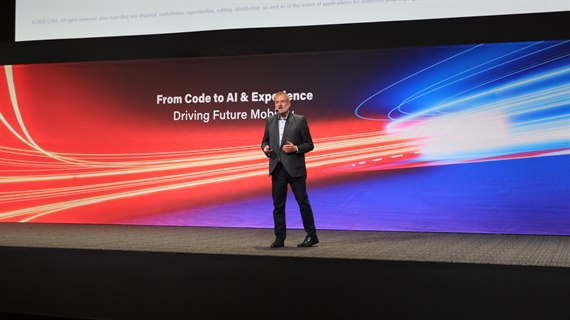
CASE 01 International Policy & Investment Briefing
PROJECT ANALYSIS
An international investment briefing involving government and public-sector representatives as well as overseas companies, featuring policy presentations, investment environment briefings, industrial policy discussions, and corporate Q&A sessions.
QMS PROCESS
- Project Analysis
- Presentation Material Review
- Policy & Investment Terminology Database Development
- Matching Score Calculation
- Human Review
- Final Expert Assignment
- Equipment & Audio System Check
- Simultaneous Interpretation
- Q&A Support
- Post-Event Quality Evaluation
PROJECT REQUIREMENTS
| Evaluation Criteria | Requirement Level |
|---|---|
| Expertise in Policy, Economics & Investment | ★★★★★ |
| Government & Public-Sector Event Experience | ★★★★★ |
| Simultaneous Interpreting Proficiency | ★★★★★ |
| Policy & Investment Terminology Expertise | ★★★★★ |
| Real-Time Q&A Handling | ★★★★☆ |
| International Event Experience | ★★★★☆ |
MATCHING SCORE
| Evaluation Criteria | Weight | Score |
|---|---|---|
| Domain Expertise | 25 | 24 |
| Similar Project Experience | 20 | 19 |
| Interpretation Skill Fit | 15 | 15 |
| Terminology Competency | 15 | 14 |
| Q&A / Risk Response | 10 | 9 |
| Performance Stability | 10 | 9 |
| Operational Fit | 5 | 5 |
| TOTAL MATCHING SCORE | 100 | 95 |
KEY MATCHING FACTORS
The assessment focuses on policy and investment expertise, public-sector project experience, simultaneous interpreting proficiency, and real-time Q&A handling capabilities.
PROJECT MATCHING SCORE : 95 / 100
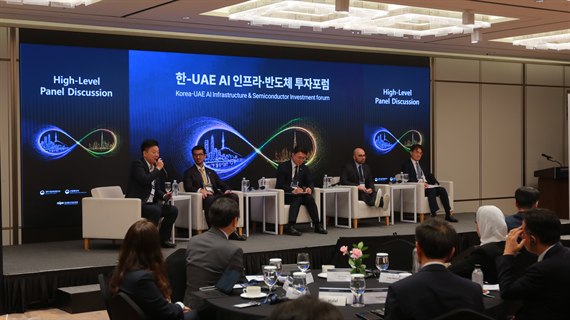
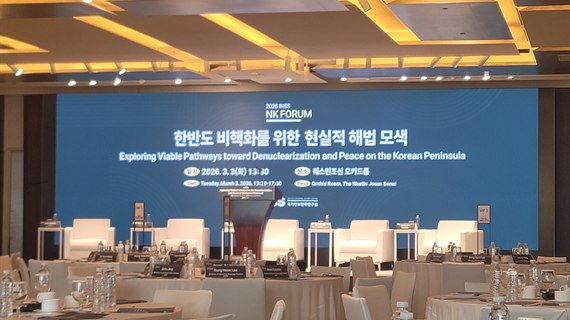

CASE 02 Overseas Buyer Export Consultation Meeting
PROJECT ANALYSIS
A business project in which overseas buyers and domestic companies discuss everything from product presentations to pricing, MOQ, delivery schedules, distribution terms, exclusivity, and contract conditions.
QMS PROCESS
- Company Analysis
- Product & Industry Analysis
- Export & Trade Terminology Preparation
- Matching Score Calculation
- Expert Review
- Interpreter Assignment
- Buyer Consultation
- Negotiation Support
- Post-Event Quality Evaluation
PROJECT REQUIREMENTS
| Evaluation Criteria | Requirement Level |
|---|---|
| Product & Industry Knowledge | ★★★★★ |
| Export & Trade Consultation Experience | ★★★★★ |
| Business Consecutive Interpreting Proficiency | ★★★★★ |
| Understanding of Pricing, MOQ & Delivery Terms | ★★★★★ |
| Contract & Negotiation Communication Skills | ★★★★★ |
| Real-Time Q&A Handling | ★★★★☆ |
MATCHING SCORE
| Evaluation Criteria | Weight | Score |
|---|---|---|
| Domain Expertise | 25 | 23 |
| Similar Project Experience | 20 | 19 |
| Interpretation Skill Fit | 15 | 15 |
| Terminology Competency | 15 | 14 |
| Q&A / Risk Response | 10 | 10 |
| Performance Stability | 10 | 9 |
| Operational Fit | 5 | 5 |
| TOTAL MATCHING SCORE | 100 | 95 |
KEY MATCHING FACTORS
Rather than general product knowledge, the assessment focuses on export and trade experience, understanding of commercial terms, negotiation skills, and professional consecutive interpreting capabilities.
PROJECT MATCHING SCORE : 95 / 100



CASE 03 International Medical & Healthcare Seminar
PROJECT ANALYSIS
A highly specialized project involving medical professionals and international experts, covering healthcare policy, clinical practice, treatment technologies, and patient care.
QMS PROCESS
- Medical Field Analysis
- Presentation Material Review
- Medical Terminology & Abbreviation Database Development
- Matching Score Calculation
- Medical Expertise Review
- Specialist Interpreter Assignment
- Interpretation Operation
- Medical Terminology Verification
- Post-Event Quality Evaluation
PROJECT REQUIREMENTS
| Evaluation Criteria | Requirement Level |
|---|---|
| Medical & Healthcare Expertise | ★★★★★ |
| Medical Terminology Knowledge | ★★★★★ |
| Healthcare Project Experience | ★★★★★ |
| Accuracy of Information Delivery | ★★★★★ |
| Simultaneous & Consecutive Interpreting Proficiency | ★★★★☆ |
| Medical Q&A Handling | ★★★★☆ |
MATCHING SCORE
| Evaluation Criteria | Weight | Score |
|---|---|---|
| Domain Expertise | 25 | 25 |
| Similar Project Experience | 20 | 19 |
| Interpretation Skill Fit | 15 | 14 |
| Terminology Competency | 15 | 15 |
| Q&A / Risk Response | 10 | 9 |
| Performance Stability | 10 | 9 |
| Operational Fit | 5 | 5 |
| TOTAL MATCHING SCORE | 100 | 96 |
KEY MATCHING FACTORS
The assessment prioritizes medical expertise, proficiency in medical terminology, and relevant healthcare project experience over general interpreting experience.
PROJECT MATCHING SCORE : 96 / 100

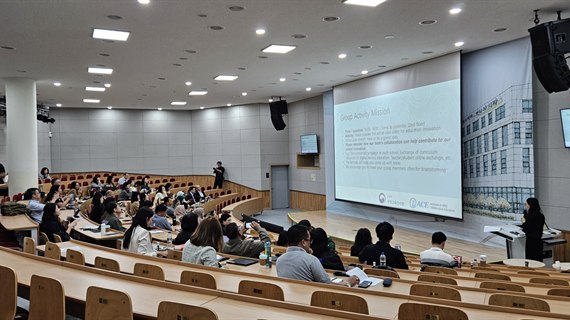

CASE 04 Corporate IR & International Investor Meeting
PROJECT ANALYSIS
A corporate IR project in which company executives present their business model, technology, market strategy, revenue structure, KPIs, and growth plans to international investors and respond to investor questions.
QMS PROCESS
- Company & Industry Analysis
- IR Material Review
- KPI, Financial & Investment Terminology Preparation
- Matching Score Calculation
- Human Review
- IR Specialist Interpreter Assignment
- Investor Meeting
- Q&A & Negotiation Support
- Post-Event Quality Evaluation
PROJECT REQUIREMENTS
| Evaluation Criteria | Requirement Level |
|---|---|
| IR, Finance & Investment Expertise | ★★★★★ |
| Company & Industry Knowledge | ★★★★★ |
| Financial & KPI Terminology Expertise | ★★★★★ |
| Executive-Level Interpreting Experience | ★★★★★ |
| Investor Q&A Handling | ★★★★★ |
| Confidential Negotiation Support | ★★★★☆ |
MATCHING SCORE
| Evaluation Criteria | Weight | Score |
|---|---|---|
| Domain Expertise | 25 | 24 |
| Similar Project Experience | 20 | 20 |
| Interpretation Skill Fit | 15 | 15 |
| Terminology Competency | 15 | 14 |
| Q&A / Risk Response | 10 | 10 |
| Performance Stability | 10 | 10 |
| Operational Fit | 5 | 5 |
| TOTAL MATCHING SCORE | 100 | 98 |
KEY MATCHING FACTORS
Beyond simply translating IR materials, the assessment focuses on understanding of the company and industry, investment and financial expertise, and experience handling executive and investor Q&A.
PROJECT MATCHING SCORE : 98 / 100

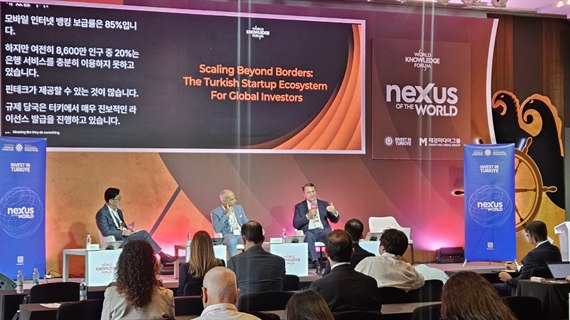

CASE 05 AI · Semiconductor · Advanced Technology Conference
PROJECT ANALYSIS
A high-density technology conference featuring specialized presentations and panel discussions on AI, semiconductors, data, and advanced manufacturing technologies.
QMS PROCESS
- Technology Field Analysis
- Presentation Material Analysis
- Technical Terminology Database Development
- Speaker-Specific Information Structuring
- Matching Score Calculation
- Human Review
- Specialist Interpreter Assignment
- Simultaneous Interpretation
- On-Site Monitoring
- Post-Event Quality Evaluation
PROJECT REQUIREMENTS
| Evaluation Criteria | Requirement Level |
|---|---|
| AI, Semiconductor & Technology Expertise | ★★★★★ |
| Technology Conference Experience | ★★★★★ |
| Technical Terminology & Abbreviation Proficiency | ★★★★★ |
| Simultaneous Interpreting Proficiency | ★★★★★ |
| High-Speed & High-Density Presentation Handling | ★★★★★ |
| Panel Discussion & Q&A Handling | ★★★★☆ |
MATCHING SCORE
| Evaluation Criteria | Weight | Score |
|---|---|---|
| Domain Expertise | 25 | 24 |
| Similar Project Experience | 20 | 19 |
| Interpretation Skill Fit | 15 | 15 |
| Terminology Competency | 15 | 15 |
| Q&A / Risk Response | 10 | 9 |
| Performance Stability | 10 | 9 |
| Operational Fit | 5 | 5 |
| TOTAL MATCHING SCORE | 100 | 96 |
KEY MATCHING FACTORS
The assessment focuses on technical expertise in the relevant industry, proficiency in specialized terminology and acronyms, and experience handling high-density presentations and simultaneous interpretation.
PROJECT MATCHING SCORE : 96 / 100


AI Analyzes,
Experts Decide
AI analyzes, experts make the decisions, and QMS manages quality.
UNIVERSE RB analyzes these differences with the goal of selecting not simply “the most experienced interpreter,” but “the interpreter best suited to each project.”
COMPARISON OF KEY REQUIREMENTS BY PROJECT TYPE
| CASE | KEY REQUIREMENTS | REQUIRED LEVEL |
|---|---|---|
| Policy & Investment | Policy Expertise + Public-Sector Experience + Simultaneous Interpretation | ★★★★★ |
| Export Consultation | Industry Knowledge + Trade & Negotiation + Consecutive Interpretation | ★★★★★ |
| Medical & Healthcare | Medical Expertise + Medical Terminology + Accuracy | ★★★★★ |
| Corporate IR | IR & Finance + Executive Interpretation + Investor Q&A | ★★★★★ |
| AI & Semiconductor | Technical Expertise + Specialized Terminology + High-Density Simultaneous Interpretation | ★★★★★ |

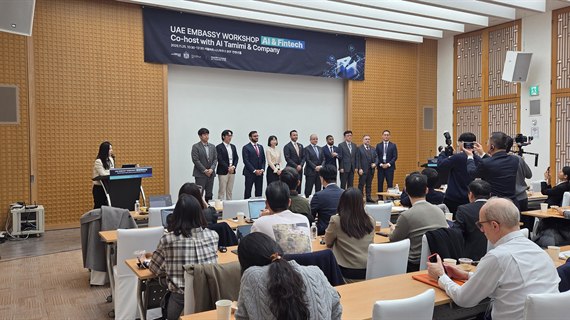
Even for the same language pair, each project requires a different level of expertise. UNIVERSE RB compares and analyzes project requirements against interpreters’ actual performance data to calculate a PROJECT MATCHING SCORE, followed by Human Review to select and assign the best-fit professional.