
Quotation


Performance
AI Translation Seminar | AI Translation · Language Industry · Global Localization Forum – UNIVERSE RB
- 2025.09.19
This international AI translation and language technology conference explores the future of machine translation, generative AI, localization, translation quality, and sustainable innovation across the global language industry.
Key interpretation topics include Neural Machine Translation (NMT), generative AI and large language models (LLMs), hybrid human–AI translation workflows, language corpora and data governance, localization automation, translation quality assurance (QA), Machine Translation Post-Editing (MTPE), copyright, data privacy, AI ethics, and ESG-driven strategies for the language services industry.
Because AI-powered translation integrates linguistics, artificial intelligence, data science, software engineering, and translation studies, professional interpretation is essential to accurately communicate technical concepts, translation workflows, quality standards, ethical considerations, and global localization strategies.
Executive Summary
The AI Translation & ATC Seminar is an international forum focused on AI-driven translation technologies, the language services industry, and global localization strategies.
The event brings together AI researchers, translators and interpreters, language service providers (LSPs), technology companies, academics, and policy makers to discuss the future of translation and interpreting in the age of artificial intelligence.
Simultaneous interpreters must accurately deliver discussions that intersect AI technology, linguistics, and business models, ensuring clarity and neutrality in a rapidly evolving global language industry.
1. Event Overview
The AI Translation & ATC Seminar examines the transformation of the language services industry through artificial intelligence and automation.
The forum covers technological innovation, industry practices, and regulatory issues shaping the future of global communication and localization.
Participants typically include
AI researchers and computational linguists
professional translators and conference interpreters
language service providers (LSPs)
technology companies developing translation AI
academics and policy makers
Because discussions combine technical, linguistic, and business perspectives, interpreters must maintain high accuracy while preserving conceptual clarity.
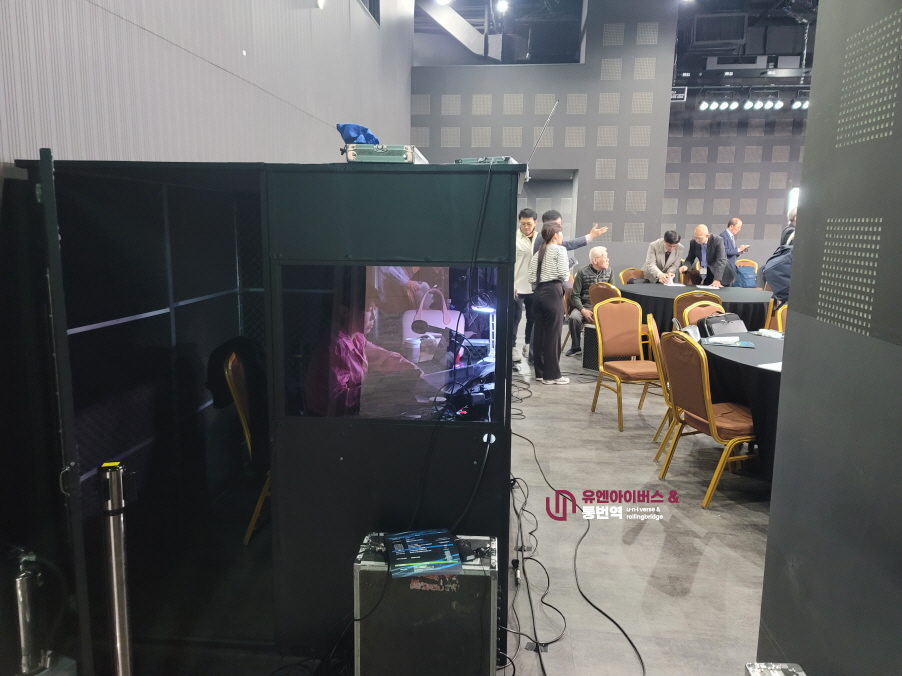
2. Key Topics
AI Translation Technology
Neural Machine Translation (NMT) architecture and recent technological advances
Generative AI and LLM-based translation workflows
(ChatGPT and large language model applications)
Hybrid human–AI translation models
Language Data and Infrastructure
Language corpus development and training datasets
Data governance and multilingual dataset management
AI training pipelines for translation systems
Global Localization Strategy
Localization for global digital platforms
Automated translation workflows for international markets
Integration of translation memory, CAT tools, and AI systems
Translation Quality Evaluation
Machine Translation Post-Editing (MTPE)
Quality evaluation metrics
BLEU score, TER, and automated quality measurement systems
Ethical and Regulatory Issues
Copyright and AI-generated content
Data privacy and data governance
Algorithmic fairness and bias
ESG and sustainability in the language services industry
3. Required Competencies for Interpreters
Knowledge of AI Terminology
Understanding key technical terms such as
Transformer architecture
Neural Machine Translation (NMT)
Large Language Models (LLM)
Fine-tuning and training datasets
Language Industry Expertise
Familiarity with professional terminology including
Localization strategies
Machine Translation Post-Editing (MTPE)
Computer-Assisted Translation (CAT) tools
Translation Memory systems
Interdisciplinary Communication Skills
Ability to interpret discussions combining
technology innovation, linguistic theory, and global business strategies.
Understanding of Legal and Ethical Frameworks
Interpreters must also understand regulatory topics such as
GDPR and data privacy
copyright issues in AI-generated content
data governance in multilingual AI systems
4. Key Interpretation Considerations
Technical Terminology Accuracy
Precise delivery of AI and translation terminology is critical.
Examples
Neural Machine Translation → NMT
Machine Translation Post-Editing → MTPE
Large Language Model → LLM
Localization → adaptation of products or services for regional markets.

Data and Metric Precision
Interpreters must accurately convey
translation quality metrics such as BLEU scores and TER.
These metrics are essential for evaluating AI translation performance.
Balancing Technical and Humanities Perspectives
AI translation discussions often combine
technical explanations
linguistic theory
industry policy debates.
Interpreters must maintain conceptual clarity across disciplines.
Industry Sensitivity
Discussions about AI replacing human translators can be sensitive.
Professional interpreters must deliver these debates accurately and neutrally, preserving the intent of speakers without distortion.
5. Actual Case Examples
Major international conferences in the language industry include
ATC Language Industry Summit (UK)
Sessions on AI translation technology and the future of the language services industry.
TAUS Global Content Summit
Discussions on AI-driven translation quality evaluation and multilingual data strategy.
LocWorld Conference
Global localization strategy and digital platform translation workflows.
FIT World Congress (International Federation of Translators)
International policy discussions on AI translation ethics and language industry governance.
Conclusion
AI Translation & ATC seminars represent a rapidly evolving field where technology, linguistics, and global business communication intersect.
Simultaneous interpretation in these forums requires
precise technical terminology
understanding of the language services industry
balanced interpretation of AI–human collaboration debates.

About Our Case Archive
The case studies and project insights presented on this website are based on experience supporting international conferences, investor presentations, government forums, executive meetings, technical seminars, and multilingual corporate events.
To protect client confidentiality and comply with the Code of Professional Conduct followed by professional interpreters worldwide, certain project details have been generalized, anonymized, or adapted for educational purposes.
The purpose of these materials is to share practical insights into multilingual communication planning while respecting the confidentiality of every client and every project.
UNIVERSE RB
Designing Communication. Managing Risk. Delivering Understanding.