
Quotation


Performance
Trade, Customs and Import Export Seminar Simultaneous Interpretation | International Regulations, FTA and Customs Procedures Forum – UNIVERSE RB
- 2025.07.31
Investment, IR & Global Business
Category
Description
This category covers interpretation cases related to investment communication,
including investor relations presentations, investment briefings, and global
market expansion strategies.
UNIVERSE RB provides integrated services including:
Simultaneous interpretation Consecutive interpretation IR document translation Investment presentation interpretation QMS-based quality management operationsWe support investment briefings, IR presentations, and global business collaboration sessions with professional interpretation services.
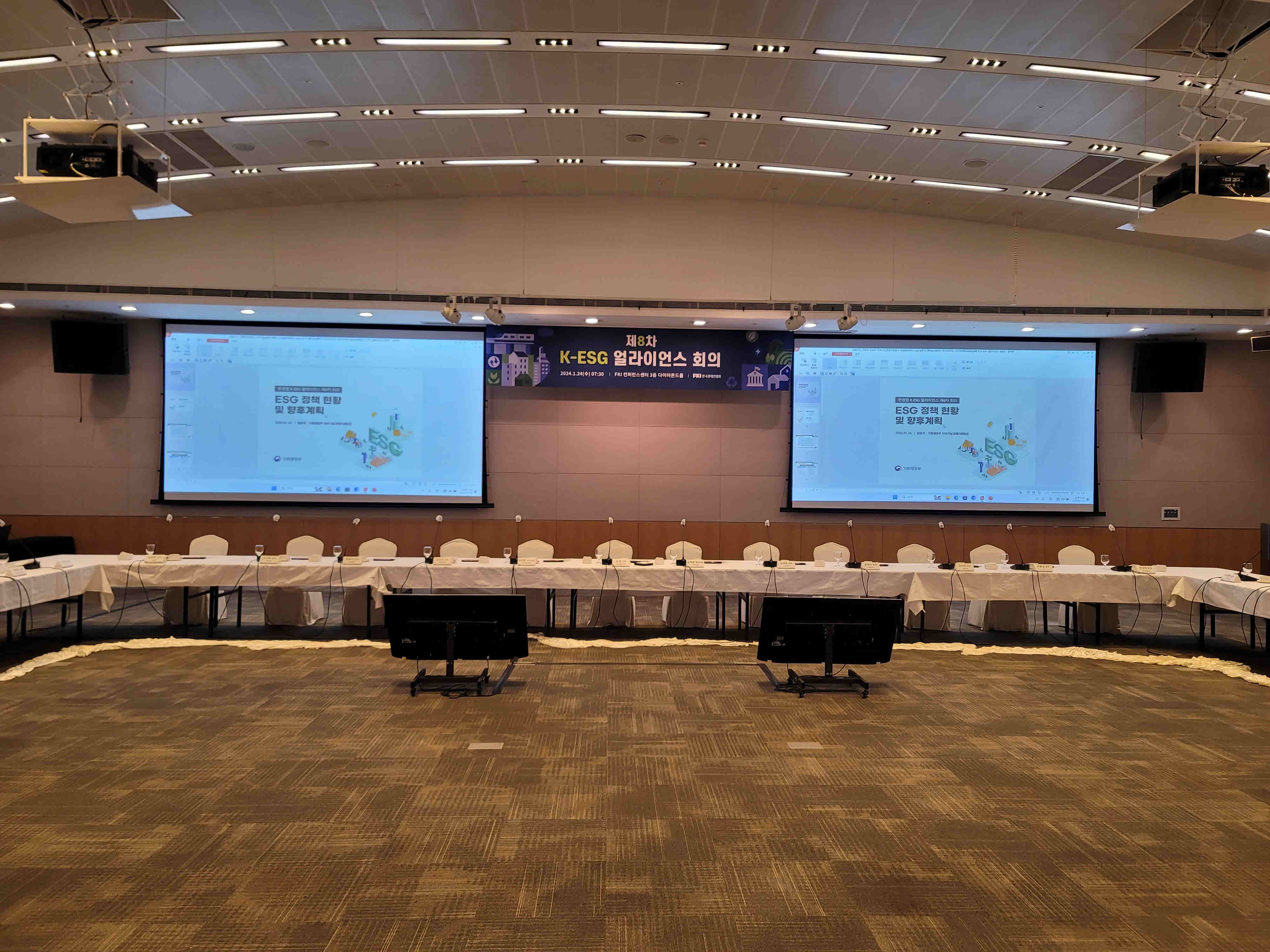
1. Event Overview
This seminar focused on international trade, import–export operations, and regulatory compliance, covering topics such as Customs Duties, Free Trade Agreements (FTA), HS Code classification, customs clearance procedures, and recent changes in international trade regulations.
Attendees included trade company representatives, licensed customs brokers, import–export practitioners, public institutions, and policy experts. Interpretation services were delivered to ensure accurate real-time transmission of complex trade, tax, and regulatory content.
As tariff rates, enforcement timelines, and regulatory interpretations directly affect operational costs and compliance risks, the event required high precision and structurally clear communication.
2. Why Is Trade & Customs Interpretation High-Complexity?
“How is it different from general industrial seminar interpretation?”
The trade and customs domain involves:
-
Extensive numerical data (tariff rates, timelines, thresholds)
-
Cost implications based on regulatory interpretation
-
Strict terminology distinctions across different FTAs
-
Immediate operational impact from policy changes
Q&A sessions accounted for approximately 20–30% of total seminar time, with questions heavily focused on practical application.
A single wording difference may directly affect customs costs or clearance risks.
3. Scope of Interpretation Services
▸ Customs Duty & Regulatory Framework Interpretation
-
Tariff structure and rate application
-
Reduction and exemption schemes
-
Practical implementation implications
▸ FTA & Rules of Origin Interpretation
-
Agreement eligibility requirements
-
Origin criteria
-
Certification procedures
-
Clear distinction between agreement-specific terminology
▸ HS Code Classification Interpretation
-
Product classification standards
-
Key considerations when reclassification occurs
▸ Customs Clearance & International Regulation Interpretation
-
Import/export declaration procedures
-
Documentation requirements
-
Recent regulatory amendments
▸ Policy Updates & Implementation Timelines
-
Tariff rates
-
Effective dates
-
Regulatory revision details
4. Role of the Interpreter
-
Structuring complex policy explanations into practitioner-friendly communication
-
Using accurate trade, customs, and taxation terminology
-
Reflecting current FTA and tariff policy trends
-
Ensuring precise delivery of numbers, dates, and regulatory conditions
Trade seminar interpretation is not merely informational;
it functions as operational risk management communication.
5. Pre-Event Preparation & Strategy
-
Advance review of customs, FTA, and clearance materials
-
Development of specialized trade and tax terminology glossary
-
Analysis of recent regulatory amendments
-
Structuring explanations around real-world case examples
-
Operating a tariff rate and effective-date verification checklist
Over-interpretation was avoided;
priority was given to clarity and direct applicability for practitioners.
6. Cost Structure & Design Factors
Fees were determined based on:
-
Regulatory and policy complexity
-
Number of sessions and event scale
-
Requirement for simultaneous interpretation equipment and technical staff
-
Timing of advance material delivery
-
Multilingual support requirements
-
Level of legal and tax expertise required
For regulation-centered seminars, preparation time significantly impacts quality stability.
7. Key Risks
-
Errors in tariff rates or HS Code classification
-
Misinterpretation of enforcement dates
-
Overstatement or understatement of agreement conditions
-
Distortion of regulatory interpretation
-
Misunderstanding of application scope during Q&A
Trade and customs interpretation is directly linked to cost exposure and compliance risk.
8. Application of the 9-Step QMS Framework
The seminar was managed under a structured quality control process:
-
Analysis of event objectives and trade scope
-
Collection of policy and regulatory materials
-
Consolidation of customs and FTA terminology
-
Matching interpreters with domain expertise
-
Review of presentation flow
-
Operation of tariff and timeline verification checklist
-
On-site quality monitoring
-
Q&A support and clarification management
-
Post-event feedback integration
This minimized risks related to regulatory and numerical miscommunication.
9. Outcomes
The seminar successfully delivered key trade, customs, and regulatory information to participants with structural clarity.
Policy updates and practical application points were communicated accurately, enabling smooth follow-up discussions and operational implementation.
10. Practical Applications
-
FTA and tariff reform briefings
-
Import/export customs procedure seminars
-
International trade regulatory compliance strategy sessions
-
HS Code classification training programs
-
Export–import practice seminars for SMEs
Supported Languages
-
Spanish interpretation and translation (including simultaneous interpretation)
-
English, Chinese, Japanese, and other multilingual support available
In large-scale international seminars, stable multilingual communication is achieved when interpretation systems, technical equipment, and interpreter operations are designed as an integrated architecture.
Conclusion
Trade, customs, and import–export seminar interpretation is not simple information transfer.
It is a specialized communication function that directly influences operational risk and cost stability.
When tariff rates, FTA conditions, and customs procedures are delivered with precision,
companies can secure regulatory compliance and financial predictability.
Through a QMS-based quality management framework,
policy, numerical, and regulatory communication risks were structurally minimized.
This
session represents one of the cases conducted as part of corporate investment
communication and global market strategy discussions.
Investment strategies and market approaches continue to evolve according to
global economic conditions and industry developments.
→ Browse Global Business Expansion Cases
https://universerb.com/en/11_en/271?page=39
https://universerb.com/en/11_en/227?page=39
The case archive on this
website is based on interpretation and global communication experiences
conducted in international seminars, policy forums, corporate presentations,
and industry conferences.
To comply with client confidentiality and the Code of Professional Conduct,
some event details are described in a generalized manner.