
Quotation


Performance
[FAQ] Is Single-Interpreter Simultaneous Interpretation Possible?
- 2026.02.20
■ Interpreter Configuration Guidelines
Single-interpreter simultaneous interpretation is limited to small-scale events of up to two hours.
If the session runs longer or involves high speech density, interpretation quality may decline due to fatigue and reduced concentration.
For formal events such as:
International forums
Policy conferences
High-level executive meetings
A two-interpreter setup is strongly recommended.
According to international interpretation standards, two interpreters alternate to maintain accuracy, focus, and quality.
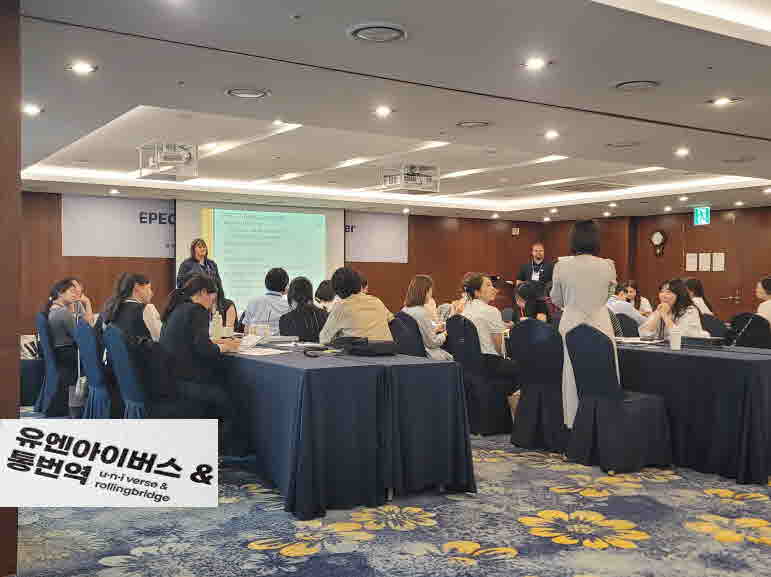
■ Principles of Interpreter and System Design
Interpretation planning is not simply about the number of interpreters.
It must be designed based on:
Event environment
Speech density
Subject complexity
Audience importance
Choosing interpreter numbers based solely on price comparison can lead to unintended results.
For example, assigning two lower-grade interpreters may increase the total budget while reducing overall event quality.
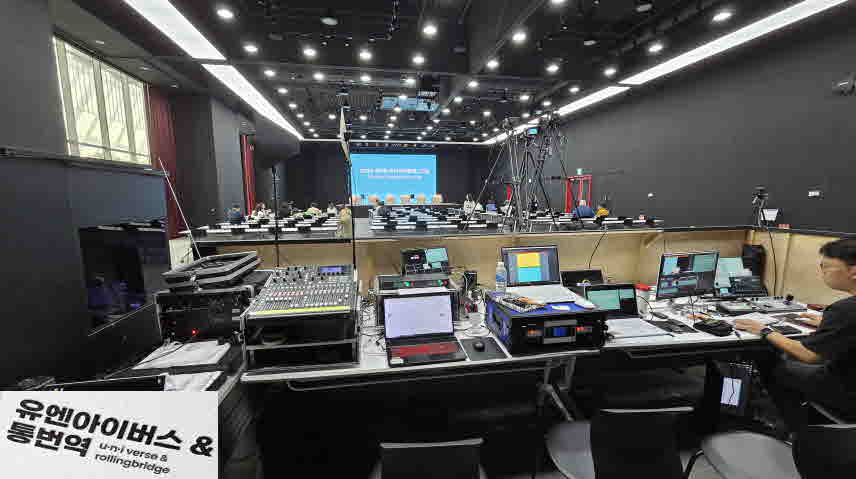
■ Cases Where Single-Interpreter Setup Is Possible
Single-interpreter simultaneous interpretation may be suitable in the following cases:
A single foreign speaker delivering a presentation of approximately one hour
An award ceremony lasting up to three hours with low interpretation density
Three speakers presenting separately with sufficient time gaps
(e.g., 30-minute sessions in the morning, afternoon, and evening)
FAQ | Single-Interpreter Simultaneous Interpretation & Team Configuration
Yes, it is possible.
However, it is not suitable for all events and is typically used only under limited conditions depending on the event structure and speaking intensity.
Single-interpreter simultaneous interpretation may be feasible when:
A foreign speaker presents for less than one hour
The number of speakers is small
Q&A sessions are limited
The speaking density is relatively low
The appropriate interpretation setup should always be designed based on the event environment and communication requirements.
Q2. Why do international conferences usually use two interpreters?
International conference interpretation standards generally recommend a two-interpreter team.
This structure helps maintain:
High levels of concentration during dense listening and speaking
Accuracy when handling technical terminology and numerical data
Stable interpretation quality during longer sessions
Two-interpreter teams are typically used in:
International forums
Government policy conferences
Corporate investor relations events
International cooperation meetings
Q3. How long can single-interpreter simultaneous interpretation be provided?
In most cases, single-interpreter simultaneous interpretation is recommended only for events lasting up to approximately two hours.
It may be feasible when:
The event is presentation-focused
There are limited Q&A sessions
The number of speakers is small
If the speaking density becomes high or the event runs longer, interpretation quality may decline.
Q4. Can a three-hour event still be handled by one interpreter?
In some cases, yes.
For example:
Award ceremonies
Opening ceremonies
Events with long breaks between speeches
What matters most is not the total event duration, but the actual interpretation workload and speaking density.
Q5. How is the number of interpreters determined?
The number of interpreters is determined based on several factors, including:
Number of speakers
Speech speed
Terminology complexity
Proportion of Q&A sessions
Level of formality of the event
These elements are analyzed together to design the most appropriate interpretation system.
Q6. Does reducing the number of interpreters significantly reduce costs?
Not necessarily.
For example:
Two lower-grade interpreters
One highly specialized interpreter
In some cases, the overall cost difference may be small, while the quality may actually be more stable with the experienced interpreter.
Therefore, interpreter expertise often matters more than simply increasing the number of interpreters.
Q7. What factors determine interpretation quality?
Interpretation quality depends on several key factors:
Interpreter expertise
Event structure
Audio environment
Terminology preparation
Availability of presentation materials
Interpretation should therefore be understood as both a professional service and a communication system design process.
Notice on Case Archive
The case archive presented on this website is based on interpretation and global communication services performed for international seminars, policy forums, corporate presentations, and industry conferences.
To protect client confidentiality and comply with international professional standards, including the Code of Professional Conduct, certain event details may be generalized in the descriptions.