
Quotation


Performance
Korea–France Business Leaders Clean Energy Future Dialogue Seminar Simultaneous Interpretation | Clean Energy · Energy Transition · Bilateral Cooperation – UNIVERSE RB
- 2026.02.21
Public Policy & Global Governance
Category
Description
This category covers interpretation cases related to international policy
forums, public cooperation initiatives, ODA programs, and global governance
topics including environmental and climate policy.
UNIVERSE RB provides integrated services including:
Simultaneous interpretation Consecutive interpretation International conference interpretation Policy document translation QMS-based quality management operations
We support international policy forums, government cooperation meetings, and global governance conferences with stable interpretation environments.
1. Overview
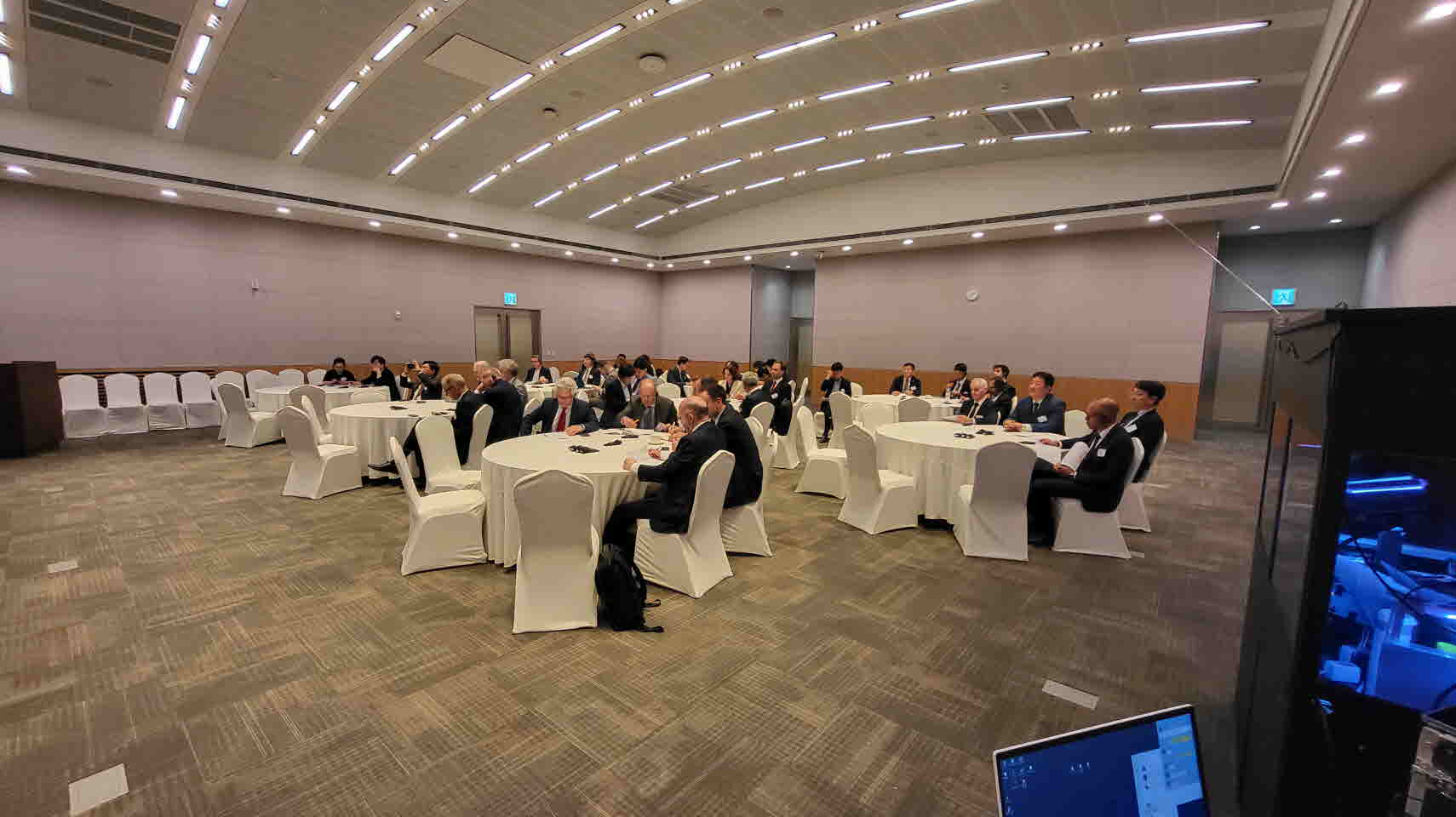
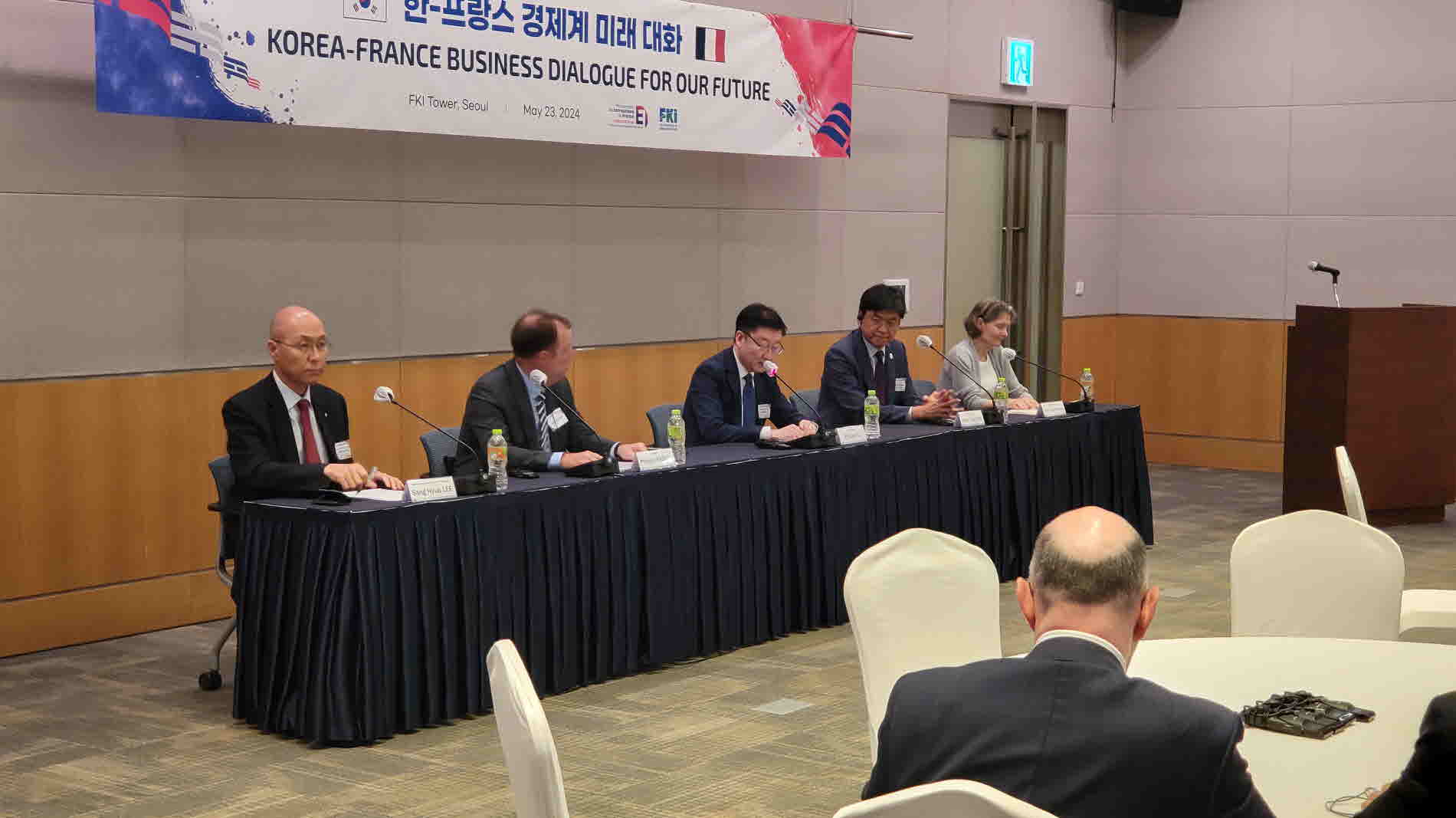
The Korea–France Business Leaders Clean Energy Future Dialogue Seminar was convened as an international economic forum aimed at strengthening bilateral cooperation in clean energy, carbon neutrality, and sustainable industrial transformation between the Republic of Korea and France.
The seminar brought together senior government officials, business leaders, energy companies, financial institutions, research organizations, and policy experts from both countries. Discussions focused on clean energy transition strategies, hydrogen and renewable energy collaboration, investment frameworks, regulatory developments, and long-term industrial competitiveness.
UNIVERSE provided simultaneous interpretation and professional translation services, accurately and neutrally conveying highly specialized content integrating energy policy, climate strategy, industrial innovation, finance, and regulatory terminology in a formal international economic forum register.

2. Key Topics
Bilateral Clean Energy Cooperation Framework
-
Korea–France clean energy partnership models
-
Carbon neutrality strategies and national roadmaps
-
Public–private cooperation mechanisms
Renewable Energy & Hydrogen Strategy
-
Offshore wind and solar development trends
-
Hydrogen production, storage, and transport strategies
-
Power grid integration and energy storage systems (ESS)
Industrial Transformation & ESG Strategy
-
Decarbonization of manufacturing and heavy industries
-
ESG disclosure and sustainable finance mechanisms
-
Green supply chain restructuring
Investment & Regulatory Environment
-
Energy investment incentives and financing models
-
Climate-related regulatory developments
-
Risk management and cross-border project structures
3. Interpretation & Translation Format
| Category | Content | Mode |
|---|---|---|
| Opening Session | Opening remarks and welcome addresses | Simultaneous Interpretation |
| Policy Session | Clean energy policy presentations | Simultaneous Interpretation |
| Industry Session | Renewable and hydrogen industry cases | Simultaneous Interpretation |
| Investment Session | Energy finance and investment strategy presentations | Simultaneous Interpretation |
| Panel Discussion | Dialogue among government and industry leaders | Simultaneous Interpretation |
| Q&A Session | Participant Q&A | Consecutive / Simultaneous Hybrid |
| Pre/Post Materials | Presentation materials, reports, MOUs, agreements | Professional Translation |
4. Required Competencies
-
Strong understanding of clean energy policy and energy transition frameworks
-
Proficiency in renewable energy, hydrogen, ESG, and carbon-related terminology
-
Ability to shift register between policy discussions and industrial/financial presentations
-
Accurate delivery of numerical data including emission targets, investment volumes, and capacity metrics
-
Formal and neutral register suitable for international economic dialogue forums
-
Balanced interpretation of sensitive policy and regulatory issues
5. UNIVERSE’s Professional Expertise
UNIVERSE has established a strong professional foundation through its “Interpretation Cost Structure Analysis” content, systematically demonstrating that interpretation quality and pricing are the result of structural system design rather than simple personnel allocation.
Interpretation is completed not only by individuals, but by systems.
Our structured interpretation system design considers:
-
Event scale and language configuration
-
Participant hierarchy and diplomatic sensitivity
-
Technical complexity of clean energy and industrial terminology
-
Equipment configuration and communication stability
For high-level international economic dialogues, we structurally manage:
-
Diplomatic tone control
-
Precision in policy and regulatory terminology
-
Neutral delivery of comparative energy strategies
-
Accurate interpretation of investment figures and technical data
6. Interpretation & Translation Notes
Accuracy in Clean Energy Terminology
-
Carbon Neutrality
-
Renewable Energy
-
Hydrogen Economy
-
Energy Storage System (ESS)
-
Decarbonization
Diplomatic & Regulatory Neutrality
Statements involving national strategies, regulatory comparisons, or industrial competitiveness are conveyed faithfully without interpreter bias.
Accuracy in Numerical & Technical Data
Emission targets, installed capacity figures, investment amounts, and project timelines must be delivered precisely, as inaccuracies may influence strategic and financial decisions.
Maintenance of International Economic Forum Register
Excessive promotional language is avoided, maintaining a professional and objective tone appropriate for bilateral economic dialogue.
7. FAQ
1) What type of interpretation is typically used for international energy and policy forums?
International energy and policy forums generally use simultaneous interpretation, allowing participants to listen to translated speeches in real time without interrupting the flow of presentations and discussions.
This format is widely used in international conferences, climate policy forums, government meetings, and economic cooperation seminars.
2) When is consecutive interpretation used in international dialogue seminars?
Consecutive interpretation may be used in smaller or more interactive segments such as:
bilateral meetings
policy consultations
media briefings
technical discussions
Depending on the structure of the forum, it may be combined with simultaneous interpretation.
3) What types of events require interpretation services in clean energy and policy discussions?
Professional interpretation services are commonly required for events such as:
international energy transition forums
climate policy and carbon neutrality conferences
bilateral economic cooperation seminars
renewable energy investment conferences
government and industry dialogue sessions
These events often involve multilingual participants and highly specialized terminology.
4) Why is interpretation important in international clean energy cooperation forums?
Clean energy cooperation forums involve complex discussions related to:
energy transition strategies
carbon neutrality policies
renewable energy technologies
cross-border investment and industrial collaboration
Accurate interpretation ensures that policy directions, investment strategies, and technical developments are clearly communicated among international participants.
5) What challenges do interpreters face in clean energy and climate policy seminars?
Interpreters in energy forums must manage challenges such as:
specialized energy and climate terminology
technical explanations of renewable energy systems
policy and regulatory discussions
numerical data related to energy capacity and emissions
Professional interpreters must deliver accurate and neutral communication in real time.
6) What documents are commonly translated for international energy dialogue events?
Typical materials requiring translation include:
policy reports and briefing documents
energy project proposals and investment reports
presentation materials and technical documents
memoranda of understanding (MOUs) and agreements
conference programs and official communications
Consistent terminology is essential for accurate communication.
7) Why is neutrality important when interpreting international policy discussions?
International policy discussions often involve comparisons between national strategies, regulatory frameworks, and market conditions.
Interpreters must faithfully convey statements without adding interpretation or bias, maintaining neutrality and professionalism.
8) How does UNIVERSE RB ensure interpretation quality for international forums?
UNIVERSE RB operates under a structured quality management framework that includes:
pre-event terminology preparation and research
interpreter briefing and technical coordination
professional interpretation equipment and system management
real-time monitoring during events
post-event evaluation and feedback
This approach supports stable and reliable interpretation services for international economic and policy