
Quotation


Performance
MOSIM Seminar Simultaneous Interpretation | Simulation Modeling · Industrial Systems · Operational Research – UNIVERSE RB
- 2026.02.21
Advanced Manufacturing & Industrial Systems
Category Description
This category covers interpretation cases related to smart manufacturing,
industrial automation, supply chain management, and ESG-driven production
strategies.
UNIVERSE RB provides integrated services including:
Simultaneous interpretation Consecutive interpretation Industrial technology seminar interpretation Technical document translation QMS-based quality management operations
We support smart manufacturing seminars, industrial technology forums, and manufacturing innovation conferences.
1. Overview
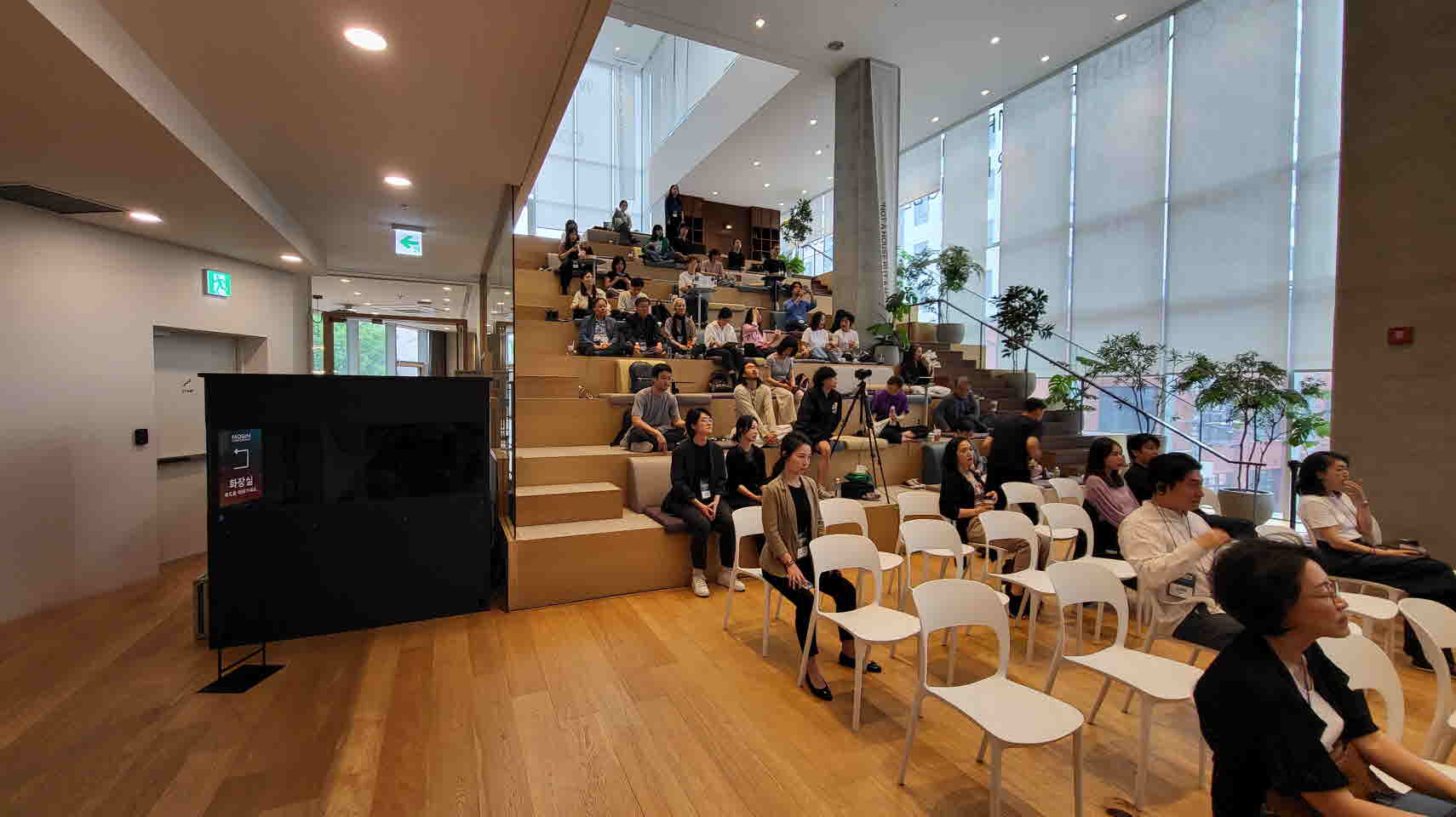
The MOSIM Seminar was convened as a specialized industrial forum focused on manufacturing systems, simulation modeling, industrial process optimization, and digital twin–based production strategies.
The seminar brought together manufacturing companies, research institutes, universities, industrial technology experts, automation solution providers, and policy stakeholders to discuss smart manufacturing environments, process efficiency enhancement, and simulation-based decision-making systems.
For this event, UNIVERSE comprehensively delivered:
-
AI-based interpretation strategy design
-
Simultaneous interpretation services
-
Professional technical document translation
-
Interpretation system architecture design
-
QMS-based quality management implementation
UNIVERSE does not merely provide interpreters.
We implement an AI-driven interpretation system design model.

2. Key Topics
① Manufacturing Systems & Simulation
-
Manufacturing system modeling
-
Production process simulation
-
Discrete Event Simulation (DES)
-
Bottleneck analysis
② Digital Twin & Smart Factory
-
Digital twin–based production strategies
-
Smart factory operational optimization
-
Real-time data integration systems
-
Cyber-Physical System (CPS) architecture
③ Industrial Optimization & AI
-
AI-based process prediction models
-
Data-driven productivity improvement
-
Quality forecasting and defect reduction strategies
-
Optimal scheduling algorithms
④ Sustainability & Industrial Policy
-
Industrial decarbonization strategies
-
Energy efficiency improvement
-
ESG-based industrial operations
-
Global manufacturing competitiveness strategies
3. Interpretation Competency Requirements
The MOSIM Seminar required advanced interpretation capabilities combining technical, mathematical, and industrial terminology.
■ Technical / Thematic Expertise
-
Proficiency in manufacturing systems and simulation terminology
-
Understanding of algorithmic and mathematical model structures
-
Familiarity with smart factory and automation technologies
-
Knowledge of data analytics and AI model terminology
■ Analytical & Structural Interpretation
-
Structural reconstruction of complex process explanations
-
Real-time handling of numerical data, statistics, and graphs
-
Meaning delivery aligned with presentation flow
■ Multidisciplinary Adaptation
-
Integrated understanding of industry, academia, and policy language
-
Responsiveness during research presentations and Q&A sessions
-
Adaptability to technical errors and live demonstration variables
UNIVERSE interpreters function not merely as language transmitters,
but as technical structure interpreters.
4. Interpretation Cost Structure Analysis
Interpretation costs for this seminar were determined not by time alone,
but by technical complexity and system architecture considerations.
Cost Determination Factors
-
Language combinations (Korean–English, etc.)
-
One vs. two simultaneous interpreters
-
Mathematical and technical difficulty weighting
-
Scope of pre-event material analysis
-
AI-assisted subtitle system integration
-
Hybrid broadcasting requirements
-
Rehearsal and quality management planning
UNIVERSE structures cost as the result of interpretation system design.

5. Interpretation System Design
System Architecture
-
Soundproof booth installation
-
FM or infrared receiver systems
-
Separation of presenter audio channels
-
Hybrid streaming integration
-
AI-assisted subtitle system deployment
-
On-site technical engineer supervision
Operational Model
-
Two simultaneous interpreters for high-complexity sessions
-
Pre-event technical rehearsal
-
Terminology glossary development and briefing
-
Dual-stage network and audio testing
Interpretation was executed not as staffing,
but as an integrated AI–space–technology system architecture.
6. AI vs Human Strategic Deployment
AI-Suitable Areas
-
Structured technical presentations
-
Repetitive data explanations
-
Automated subtitle generation
-
Draft internal technical document translation
Human-Critical Areas
-
Interpretation of mathematical models
-
Complex industrial strategy explanations
-
Research presentation Q&A sessions
-
Handling unexpected technical variables
AI performs data analysis.
Human interpreters design meaning and structure.
UNIVERSE applies an AI + Human integrated system model.

7. QMS (Quality Management System)
QMS Implementation
-
Pre-analysis of presentation materials
-
Alignment of manufacturing and simulation terminology
-
Pre-event interpreter briefing
-
Technical rehearsals and audio testing
-
Real-time on-site quality monitoring
-
Post-event feedback review
Quality is not dependent solely on individual skill.
It is engineered through a repeatable management system.
8. Translation Scope
The seminar included the translation of:
-
Program booklets
-
Technical presentation materials
-
Research paper summaries
-
Cooperation proposals
-
Post-event reports
All translations were delivered with consistent terminology and precise technical register.
9. FAQ
1) What type of interpretation is typically used for industrial simulation and manufacturing seminars?
Industrial simulation and manufacturing seminars generally use simultaneous interpretation, allowing participants to follow technical explanations and research presentations in real time.
This format is widely used in industrial engineering conferences, smart manufacturing forums, and academic–industry collaboration seminars.
2) Why is interpretation important in simulation and manufacturing technology forums?
Simulation and manufacturing seminars involve complex discussions related to:
production process modeling
industrial system optimization
digital twin technologies
AI-based manufacturing analysis
Accurate interpretation ensures that researchers, engineers, and industry professionals clearly understand technical concepts and analytical frameworks.
3) What challenges do interpreters face in simulation modeling conferences?
Interpreters working in simulation and operations research forums must handle challenges such as:
mathematical models and algorithm explanations
technical terminology related to manufacturing systems
real-time interpretation of numerical data and graphs
rapid transitions between research presentations and discussions
Professional interpreters must deliver precise and structured communication.
4) What types of events require interpretation services in industrial simulation fields?
Professional interpretation services are commonly required for events such as:
industrial simulation research conferences
smart manufacturing technology forums
operations research seminars
digital twin and industrial AI workshops
academic–industry collaboration events
These events involve highly specialized terminology and complex technical concepts.
5) What documents are commonly translated for industrial technology seminars?
Typical materials requiring translation include:
technical presentation materials
research papers and abstracts
industrial project proposals
conference programs and reports
collaboration agreements and technical documentation
Consistent terminology and precise technical language are essential.
6) How are AI tools used in interpretation environments for technical seminars?
AI-assisted tools may support interpretation through:
automated subtitle generation
speech recognition and transcription
terminology analysis for technical content
draft translation of technical documents
However, contextual interpretation and complex technical explanation remain the responsibility of human interpreters.
7) Why is interpretation system design important for technical forums?
Industrial technology forums often involve complex environments such as:
large conference halls
hybrid streaming platforms
live demonstrations
multi-language technical sessions
A structured interpretation system ensures stable audio transmission, clear communication channels, and reliable multilingual interaction.
8) How does UNIVERSE RB ensure interpretation quality for industrial technology seminars?
UNIVERSE RB applies a structured quality management system that includes:
pre-event analysis of technical materials
terminology alignment for manufacturing and simulation fields
interpreter briefing and technical rehearsals
real-time monitoring during the event
post-event quality evaluation and feedback
This system supports stable and reliable interpretation for high-complexity industrial forums.
10. Conclusion
The MOSIM Seminar was a high-complexity industrial forum where manufacturing systems, simulation, AI, and digital twin technologies converged.
UNIVERSE provided:
✔ Cost structure analysis
✔ Interpretation system design
✔ AI strategy integration
✔ QMS-based quality management
UNIVERSE operates interpretation as a strategic technical communication system, not merely as a language service.
This
case represents one of the seminars discussing manufacturing innovation and
evolving industrial production systems.
Manufacturing industries continue to develop through smart factories,
data-driven operations, and automation technologies.
→ Explore Smart Manufacturing Seminar Cases
https://universerb.com/en/11_en/4?page=45
https://universerb.com/en/11_en/222?page=39
The case archive on this
website is based on interpretation and global communication experiences
conducted in international seminars, policy forums, corporate presentations,
and industry conferences.
To comply with client confidentiality and the Code of Professional Conduct,
some event details are described in a generalized manner.