
Quotation


Performance
Korea–Japan Fisheries Resource Seminar Simultaneous Interpretation · Professional Translation | Fisheries Resource Management · Marine Policy Cooperation · Korea–Japan Fisheries Governance – UNIVERSE RB
- 2026.02.22
Public Policy & Global Governance
Category
Description
This category covers interpretation cases related to international policy
forums, public cooperation initiatives, ODA programs, and global governance
topics including environmental and climate policy.
UNIVERSE RB provides integrated services including:
Simultaneous interpretation Consecutive interpretation International conference interpretation Policy document translation QMS-based quality management operations
We support international policy forums, government cooperation meetings, and global governance conferences with stable interpretation environments.
Why Is Interpretation at a Korea–Japan Fisheries Resource Seminar Considered a High-Complexity Domain?
Interpretation at a Korea–Japan fisheries resource seminar represents a high-level professional domain where catch quotas (TAC), stock assessment models, ecosystem-based management, high seas fishing regulations, and diplomatic negotiation language converge.
AI simultaneous interpretation was applied to structured scientific reporting sessions, while bilateral negotiations and regulatory discussions were conducted through professional interpretation.
UNIVERSE structurally designs integrated AI + Human interpretation systems.
1. Overview
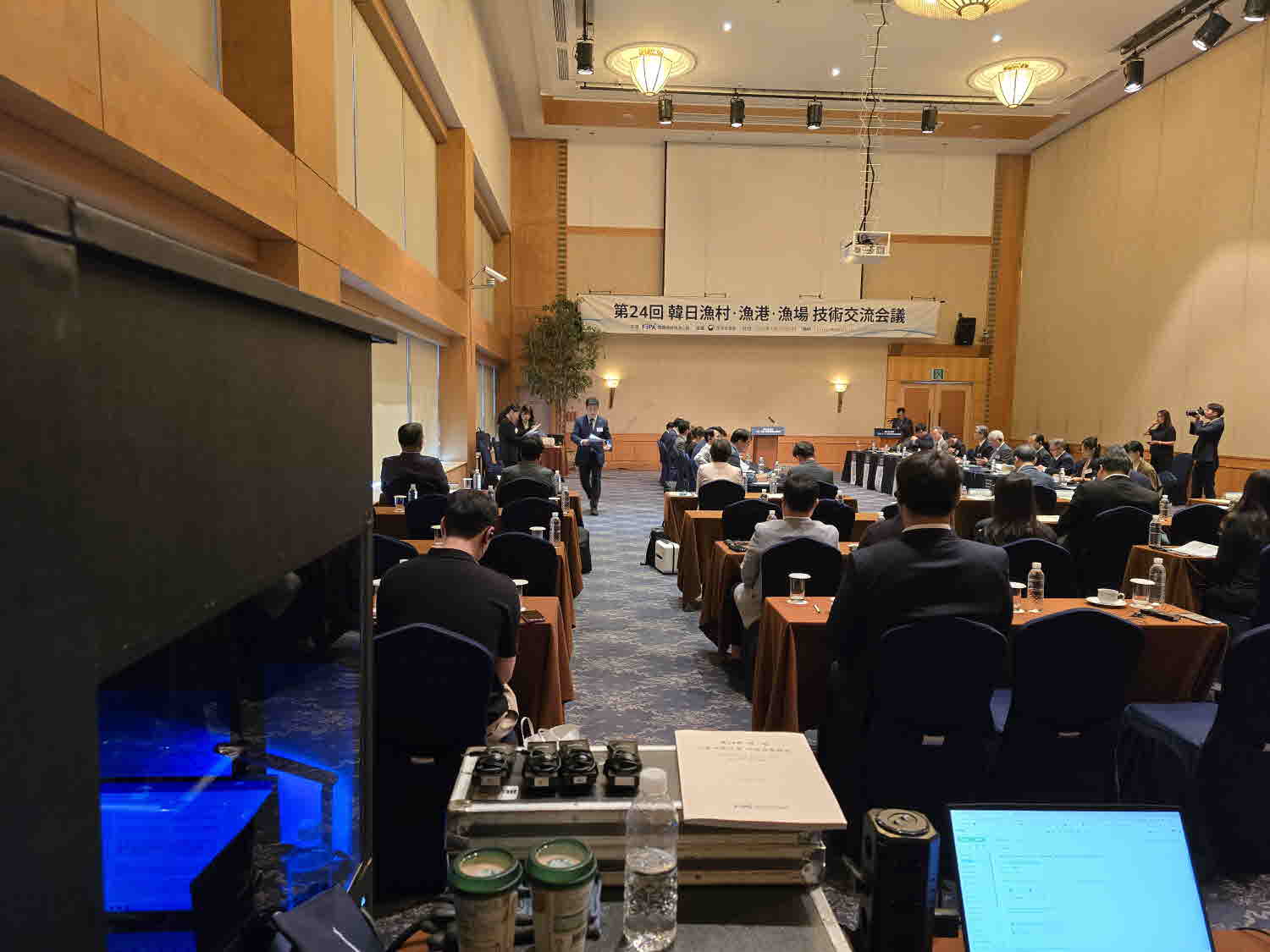
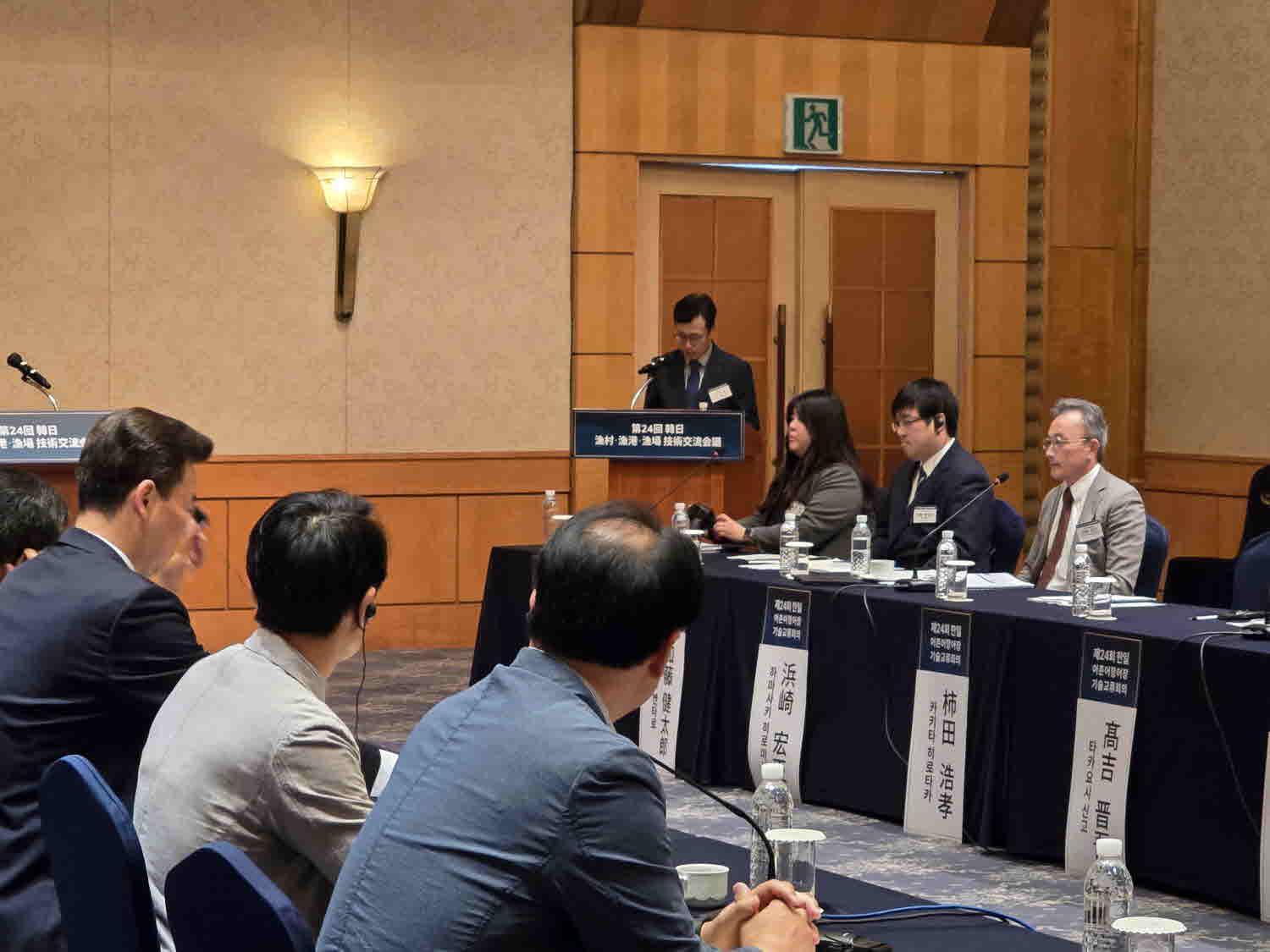
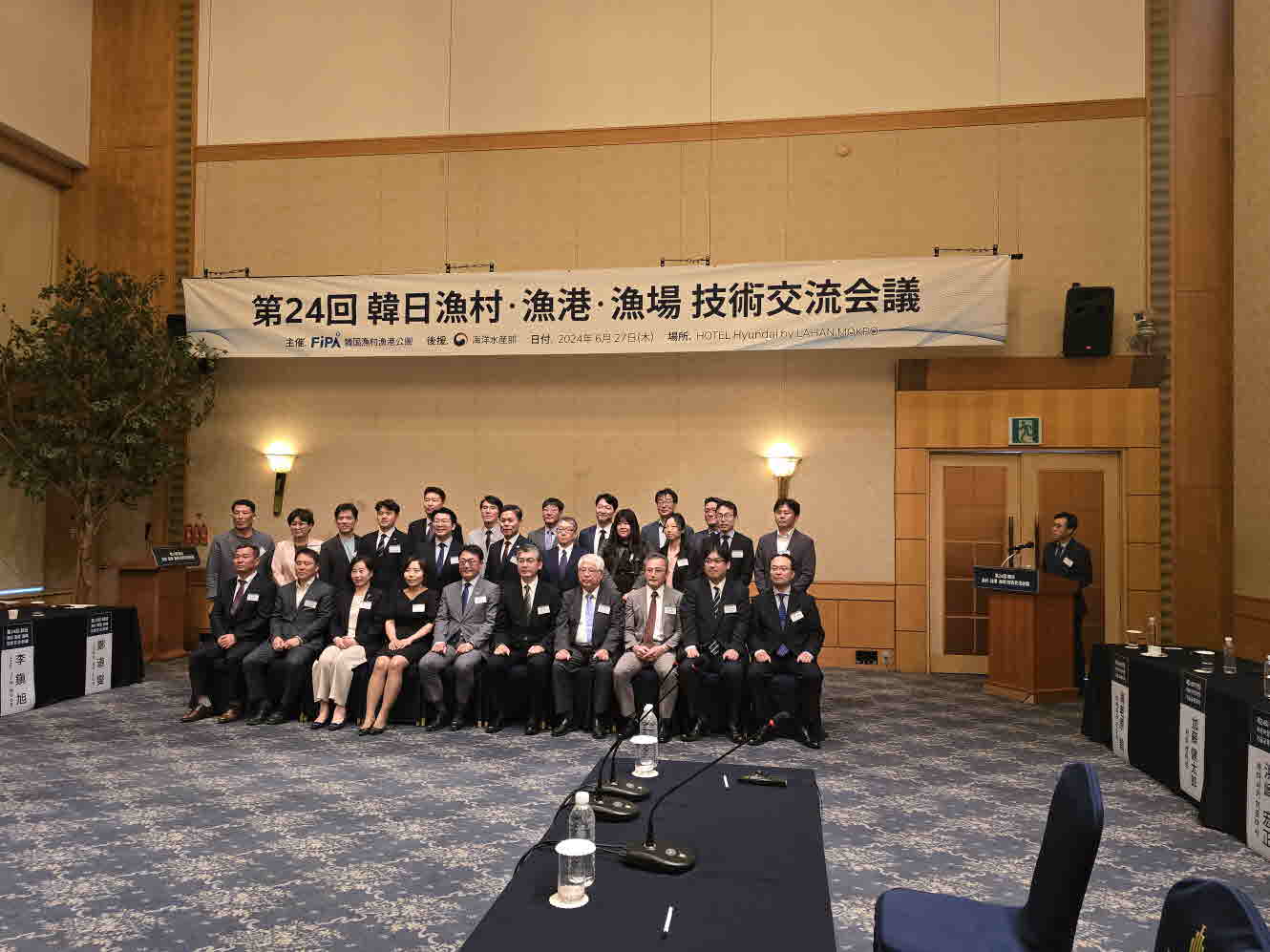
This seminar was an international consultative forum focused on joint fisheries resource management between Korea and Japan, conservation strategies, catch allocation adjustments, and science-based policy development.
Government delegations, fisheries policy authorities, marine research institutes, fisheries management officials, and international cooperation representatives participated to discuss sustainable fisheries and ocean governance frameworks.
At this event, UNIVERSE provided:
-
AI interpretation strategy design
-
Korea–Japan simultaneous interpretation
-
Specialized translation of fisheries and marine policy documents
-
Interpretation system design
-
QMS-based quality management implementation
UNIVERSE Seminar Performance Experience
UNIVERSE has extensive experience delivering interpretation services for international seminars across marine policy, energy, and industrial strategy sectors.
-
Policy forums hosted by the Ministry of Oceans and Fisheries
-
Stock assessment seminars by the National Institute of Fisheries Science
-
Fisheries policy meetings by the National Federation of Fisheries Cooperatives
-
Industrial strategy international forums by the Ministry of Trade, Industry and Energy
-
Global cooperation seminars organized by KOTRA
In particular, UNIVERSE has experience in:
✔ Interpretation based on TAC allocation and stock assessment reports
✔ Policy sessions addressing IUU (Illegal, Unreported, and Unregulated) fishing
✔ Bilateral negotiation language coordination between Korea and Japan
✔ Maintaining international-standard diplomatic and policy terminology
UNIVERSE is not merely a language service provider,
but a Marine & Fisheries Governance Interpretation System Design Company.
2. What Were the Key Topics of the Korea–Japan Fisheries Resource Seminar?
① Fisheries Resource Management
-
TAC allocation and conservation strategies
-
Resource recovery plans
-
Science-based catch adjustments
② Scientific Assessment & Data
-
Stock assessment models
-
Catch statistics analysis
-
Ecosystem-Based Management (EBM)
③ Bilateral Policy Coordination
-
Korea–Japan joint management frameworks
-
Interpretation of agreements and regulatory amendments
-
Policy coordination mechanisms
④ Regulatory & Compliance Framework
-
Fishing regulations and reporting systems
-
IUU fishing countermeasures
-
Monitoring and enforcement mechanisms
⑤ Sustainability & Ocean Governance
-
Sustainable fisheries strategies
-
Ocean governance structures
-
International fisheries cooperation models
3. What Competencies Are Required for Interpretation at a Korea–Japan Fisheries Resource Seminar?
■ Marine & Fisheries Expertise
-
Understanding of fisheries resource management terminology
-
Familiarity with TAC, IUU, and EEZ concepts
-
Knowledge of ecosystem-based management models
■ Policy & Diplomatic Communication
-
Maintenance of formal bilateral consultation language
-
Diplomatic nuance coordination
-
Accurate interpretation of agreement texts
■ Scientific & Data Interpretation
-
Interpretation of stock assessment and statistical reports
-
Precise delivery of numerical data
-
Real-time response to Q&A sessions
UNIVERSE interpreters serve not merely as language transmitters,
but as Marine & Bilateral Governance Context Architects.
4. How Is Interpretation Cost Determined for a Korea–Japan Fisheries Seminar?
Interpretation costs are determined not solely by time, but by specialization level, negotiation complexity, and scientific data intensity.
Cost Determination Factors
-
Korea–Japan language combination
-
Two-interpreter simultaneous configuration
-
Fisheries and marine policy specialization weighting
-
Scope of pre-analysis of scientific reporting materials
-
Application of AI subtitle support systems
-
Inclusion of negotiation sessions
-
Rehearsal and quality management design
UNIVERSE structures costs as the outcome of interpretation system design.
5. To What Extent Can AI Interpretation Be Applied in a Korea–Japan Fisheries Seminar?
AI vs. Human Strategic Comparison
| Category | AI Interpretation | Professional Simultaneous Interpretation |
|---|---|---|
| Structured scientific presentations | Applicable | Excellent |
| Statistical and numerical explanations | Applicable | Excellent |
| Bilateral negotiations | Limited | Essential |
| Regulatory amendment discussions | Limited | Essential |
| Real-time diplomatic coordination | Limited | Essential |
AI was utilized for structured scientific reporting sessions,
while bilateral negotiations and regulatory discussions were conducted through professional interpretation.
UNIVERSE applies an integrated AI + Human interpretation model.
6. How Is the Interpretation System Designed?
System Architecture
-
International-standard soundproof booths
-
Multilingual channel operation
-
FM or infrared receiver systems
-
Multi-channel audio separation
-
AI subtitle support systems
-
On-site engineering supervision
Operational Model
-
Two-interpreter simultaneous configuration
-
Development of fisheries and marine-specific glossaries
-
Pre-analysis of scientific reporting materials
-
Audio, video, and network redundancy checks
Interpretation is executed not as manpower deployment,
but as an integrated system combining marine science, policy, diplomacy, and governance contexts.
7.FAQ
1) Why is interpretation at a Korea–Japan fisheries resource seminar considered highly complex?
Korea–Japan fisheries seminars involve discussions on fisheries resource management, TAC allocation strategies, stock assessment models, ecosystem-based management, and bilateral policy coordination.
Because these forums combine scientific data analysis, regulatory frameworks, and diplomatic negotiations between governments, professional interpreters with expertise in marine policy and fisheries governance are essential.
2) How is interpretation for fisheries policy seminars different from general conferences?
Fisheries policy seminars require interpretation across several specialized domains, including:
-
Fisheries resource management and conservation strategies
-
Scientific stock assessment and ecosystem-based management
-
International fisheries agreements and regulatory frameworks
-
Bilateral negotiations between government delegations
Interpreters must therefore understand scientific terminology as well as diplomatic and policy communication standards.
3) What interpretation setup is typically used for Korea–Japan fisheries seminars?
Interpretation for fisheries governance forums is typically organized as follows:
-
Scientific reporting sessions: two simultaneous interpreters
-
Policy discussions and regulatory consultations: simultaneous interpretation
-
Bilateral negotiation sessions: professional simultaneous interpretation
-
Multilingual participation: multi-channel audio interpretation systems
This configuration supports stable communication between government representatives, scientists, and fisheries management authorities.
4) What are the major interpretation challenges in fisheries governance meetings?
Key challenges include:
-
Fisheries terminology such as TAC (Total Allowable Catch), IUU fishing, and EEZ frameworks
-
Scientific data interpretation including stock assessments and catch statistics
-
Regulatory discussions regarding international fisheries agreements
-
Diplomatic negotiation language between national delegations
These meetings often combine science, policy, and diplomatic communication simultaneously.
5) How does UNIVERSE RB ensure interpretation quality for international fisheries policy forums?
UNIVERSE RB operates under a QMS-based interpretation management system, which includes:
-
Pre-analysis of scientific and policy documentation
-
Alignment of fisheries governance terminology
-
Interpreter briefing and rehearsal sessions
-
Real-time on-site quality monitoring
-
Post-event review and feedback evaluation
This structured system ensures reliable communication in international policy environments.
6) Can AI interpretation technologies be used during fisheries policy seminars?
AI can assist in structured areas such as:
-
Scientific reporting presentations
-
Statistical and numerical explanations
-
Automated subtitle generation
However, professional interpreters remain essential for:
-
Bilateral negotiations between governments
-
Regulatory amendment discussions
-
Diplomatic coordination
-
Real-time Q&A sessions
UNIVERSE RB therefore operates an AI + Human integrated interpretation system.
7) What quality standards are most important in fisheries governance interpretation?
The most critical standards include:
-
Accurate delivery of fisheries management terminology
-
Precise interpretation of scientific and regulatory discussions
-
Stable diplomatic communication among government delegations
UNIVERSE RB ensures these standards through structured interpretation system design and QMS-based quality management.
Conclusion
Interpretation at a Korea–Japan fisheries resource seminar represents a high-level professional domain where resource management, scientific data, and diplomatic negotiations converge.
AI is applied to structured scientific reporting sessions, while negotiation segments are conducted through professional interpretation.
UNIVERSE designs interpretation as an ocean governance communication infrastructure system.
This
case represents one of the sessions conducted as part of international policy
cooperation and global governance discussions.
Policy environments and international cooperation frameworks continue to evolve
in response to economic, environmental, and development policy changes.
→ View Public Policy & Global Governance Cases
https://universerb.com/en/11_en/308?page=39
https://universerb.com/en/11_en/309?page=39
The case archive on this
website is based on interpretation and global communication experiences
conducted in international seminars, policy forums, corporate presentations,
and industry conferences.
To comply with client confidentiality and the Code of Professional Conduct,
some event details are described in a generalized manner.