
Quotation


Performance
Global Climate Policy Conference Simultaneous Interpretation | COP and ESG Strategy Forum – UNIVERSE RB
- 2025.07.31
Public Policy & Global Governance
Category
Description
This category covers interpretation cases related to international policy
forums, public cooperation initiatives, ODA programs, and global governance
topics including environmental and climate policy.
UNIVERSE RB provides integrated services including:
Simultaneous interpretation Consecutive interpretation International conference interpretation Policy document translation QMS-based quality management operationsWe support international policy forums, government cooperation meetings, and global governance conferences with stable interpretation environments
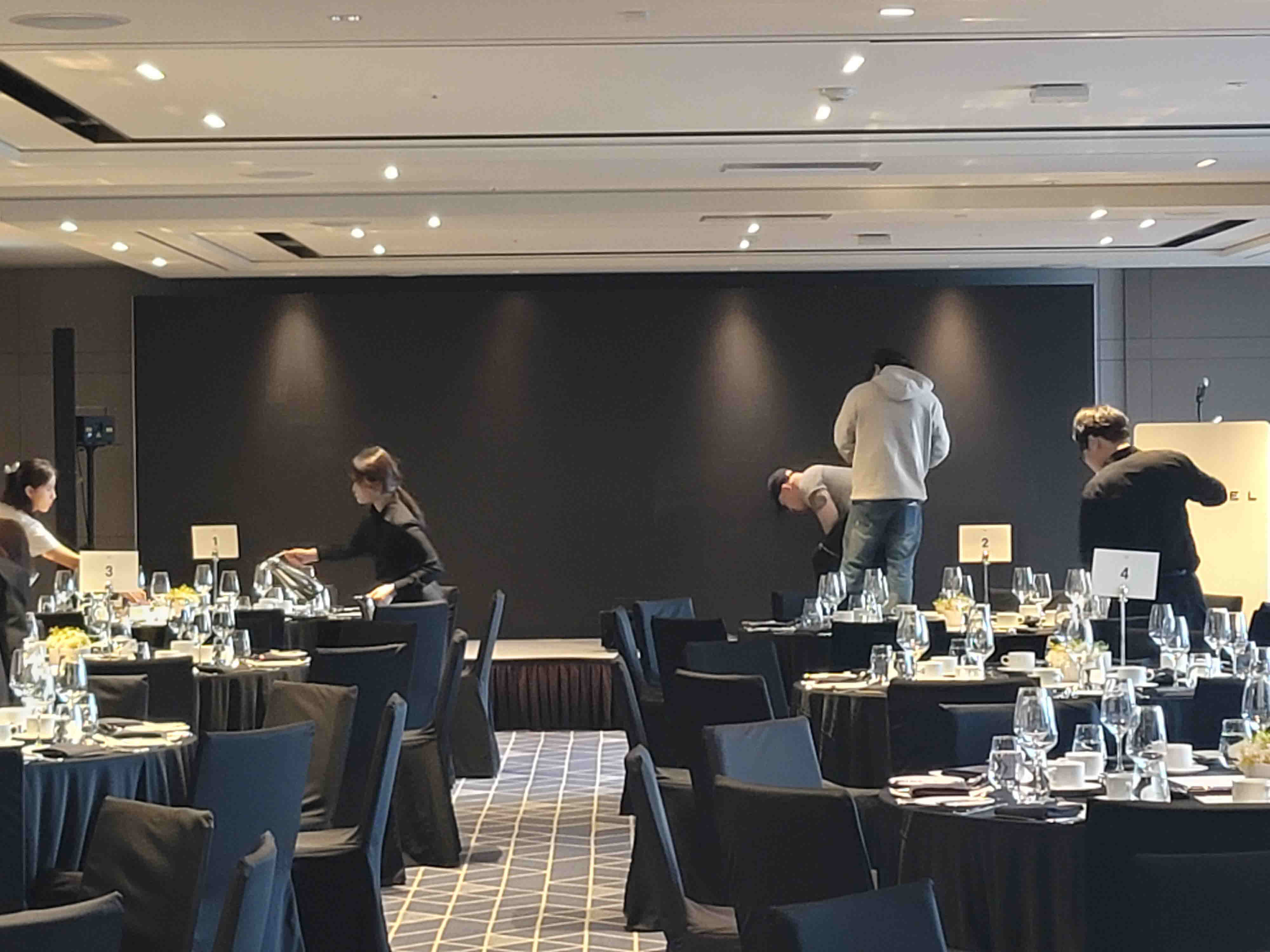
1. Event Overview
Simultaneous English–Korean interpretation was provided at international conferences, policy forums, and multilateral summits focused on global climate change response.
Interpretation services were delivered at official climate and environmental events, including forums related to the United Nations Framework Convention on Climate Change (UNFCCC), Conferences of the Parties (COP), the Green Climate Fund (GCF), and ESG-focused international platforms.
The primary objective was to ensure accurate and timely delivery of complex statements involving climate science, carbon neutrality, renewable energy, sustainable development (SDGs), and environmental policy.
Climate diplomacy interpretation represents a high-level specialized field where scientific data and policy negotiation language intersect.
2. Complexity Analysis
International climate conferences typically involve:
-
Extensive scientific data and statistical references
-
International negotiation language and formal agreement texts
-
Diplomatic rhetoric combined with policy nuance
-
Diverging national positions
-
Sensitive environmental and economic interests
In particular, inaccuracies in NDC targets, carbon reduction percentages, or climate finance figures can lead to diplomatic misunderstandings.
3. Key Interpretation Scope
-
Simultaneous interpretation of high-level COP plenary speeches
-
Presentations on Emissions Trading Systems (ETS) and Nationally Determined Contributions (NDCs)
-
Sessions on sustainable finance and climate technology transfer
-
Discussions on climate adaptation and Loss & Damage frameworks
-
Speeches by international NGOs and youth organizations
4. Core Operational Indicators
| Category | Details |
|---|---|
| Event Type | International Summit · Policy Forum · Multilateral Negotiation |
| Interpretation Mode | English–Korean Simultaneous Interpretation |
| Science & Policy Content | Approx. 60% or more |
| Numerical & Reduction Targets | Referenced in 30–40% of presentations |
| Participants | Government Delegations · International Organizations · NGOs · Corporations |
| Media & Documentation | Live broadcast & official documentation |
5. Interpretation Formats
Simultaneous Interpretation
-
Heads-of-state speeches
-
Official declarations
-
Panel discussions
Negotiation Interpretation
-
Bilateral and multilateral coordination sessions
Protocol Interpretation
-
High-level welcome remarks and formal addresses
6. Core Competencies Required
-
In-depth understanding of climate science and environmental policy terminology
-
Ability to interpret UNFCCC structures and negotiation documents
-
Precise delivery of emission targets and financial figures
-
Maintenance of neutrality in sensitive environmental diplomacy contexts
-
Harmonization of communication styles across governments, civil society, and corporate actors
Climate diplomacy interpretation requires simultaneous comprehension of science and international negotiation frameworks.
7. Pre-Event Preparation & Strategy
-
Analysis of UNFCCC structure and COP agenda frameworks
-
Advance review of NDC and ETS policy documents
-
Development of SDGs and ESG terminology glossaries
-
Analysis of diplomatic rhetoric styles by country
-
Operation of verification checklists for emission targets and climate finance figures
8. Application of the QMS 9-Step Quality Management System
-
Analysis of conference agenda and negotiation scope
-
Advance acquisition of official documents and declarations
-
Integration of climate and environmental terminology
-
Matching with specialized environmental conference interpreters
-
Rehearsal and equipment inspection
-
Verification checklist for numerical data and policy terminology
-
On-site quality monitoring
-
Immediate response to urgent negotiation statements
-
Post-event feedback and continuous improvement
9. Representative Engagement Cases
-
“2024 UN Climate Leadership Forum” – Simultaneous Interpretation
-
“International Seminar on Climate Crisis and ESG Management Strategy” – Interpretation
-
“Green Climate Fund High-Level Dialogue” – Interpretation Support
In large-scale international seminars, stable multilingual communication is achieved when interpretation systems, technical equipment, and interpreter operations are designed as an integrated architecture.
Conclusion
Interpretation at international climate change conferences is a strategic language service that precisely connects scientific data with diplomatic messaging.
In discussions on carbon neutrality and global climate cooperation, distortion-free interpretation is essential to maintaining the credibility and integrity of international negotiations.
This
case represents one of the sessions conducted as part of international policy
cooperation and global governance discussions.
Policy environments and international cooperation frameworks continue to evolve
in response to economic, environmental, and development policy changes.
→ Browse Global Governance & Climate Policy Cases
https://universerb.com/en/11_en/44?page=41
https://universerb.com/en/11_en/47?page=41
The case archive on this
website is based on interpretation and global communication experiences
conducted in international seminars, policy forums, corporate presentations,
and industry conferences.
To comply with client confidentiality and the Code of Professional Conduct,
some event details are described in a generalized manner.