
Quotation


Performance
Why the Same InteWhy the Same Interpreter Delivers Different Results | Selection, Preparation and System Designrpreter Can Produce Completely Different Results
- 2026.08.04
How Interpreter Selection, Deployment Strategy, and Communication System Design Determine Interpretation Quality
The same interpreter can produce very different outcomes depending on how they are selected, prepared, and deployed.
The difference is not interpreter fees alone—it is subject-matter matching, deployment strategy, and communication system design.
From business negotiations and IR meetings to technical seminars and government forums, without structured management, interpretation quality and decisions can change.
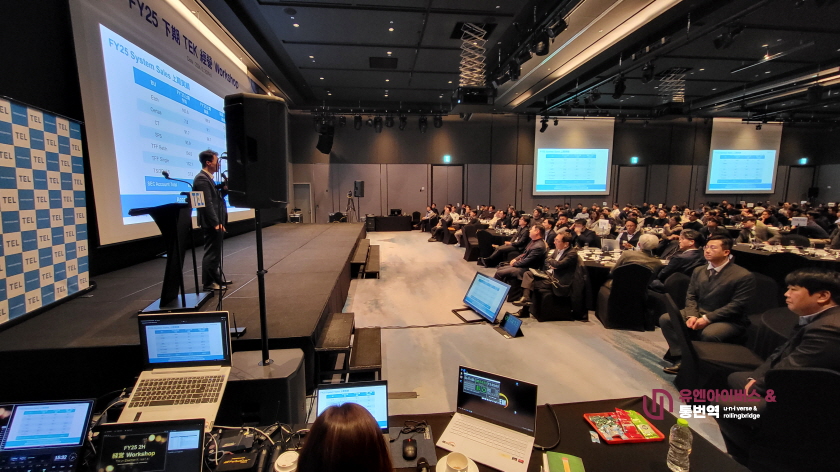
Executive Summary
Many buyers assume that if the interpreter is the same, the interpretation quality should also be the same.
In reality, this is rarely true.
Professional interpretation quality is determined not only by the interpreter's language ability but also by how the interpreter is selected, prepared, deployed, and supported throughout the project.
The difference between Tier 1–2 professional interpretation companies and lower-tier agencies or platform-based matching services is not simply the quality of individual interpreters.
It is the quality of the communication management system behind them.
Professional interpretation companies evaluate communication objectives, project complexity, technical requirements, and communication risks before assigning interpreters.
This systematic approach produces more consistent communication outcomes than simple interpreter matching.
Key Message
The same interpreter can produce very different outcomes depending on how they are selected, prepared, and deployed.
Interpretation quality is not determined solely by language ability.
Successful multilingual communication depends on the interpretation company's ability to:
- Verify interpreter qualifications
- Analyze communication complexity
- Match interpreters to the appropriate assignment
- Prepare terminology and reference materials
- Manage quality throughout the event
Ultimately, the communication system—not simply the interpreter—determines the final outcome.
How Interpretation Companies Select Interpreters
Interpreter Selection Framework by Company Tier
Interpretation Company Tier | Interpreter Selection Criteria | Deployment Strategy | Primary Strength |
Tier 1 | International credentials, proven experience, industry reputation | Dedicated project teams | Government, diplomatic, and multilingual conferences |
Tier 2 | Communication complexity, subject expertise, event objectives, risk assessment | Customized deployment by presentation, Q&A, negotiation, and session type | Communication system design |
Tier 3 | Individual interpreter expertise | Single interpreter or small-team assignment | Interpreter-centered operation |
Tier 4 | Availability and schedule matching | Basic assignment based on availability | Agency matching model |
Tier 5 | Platform registration and client selection | Open marketplace | Low-cost freelance matching |
Key Insight
The difference between Tier 1–2 and Tier 4–5 is not simply interpreter quality.
It is the difference between:
- Systematic communication management
- Individual interpreter matching
As company tier decreases, the following management functions become increasingly limited:
- Interpreter verification
- Communication planning
- Deployment strategy
- Quality assurance
- Risk management
- Event coordination
Consequently, communication outcomes become more dependent on individual performance rather than a managed system.
Why Do Similar Interpreters Produce Different Results?
Many buyers naturally assume:
"If the interpreter is the same, the outcome should also be the same."
Professional interpretation rarely works this way.
The same interpreter may perform exceptionally well in one event and struggle in another when:
- The assignment does not match their expertise.
- Communication complexity is underestimated.
- Preparation time is insufficient.
- Presentation materials are unavailable.
- Q&A requirements are not anticipated.
- The deployment strategy is inappropriate.
Successful interpretation depends on placing the right interpreter in the right communication environment.

How Tier 2 Companies Select Interpreters
Professional interpretation companies do not simply choose the "best" interpreter.
They first analyze the communication environment.
Step 1 — Communication Analysis
- Event objectives
- Communication structure
- Presentation vs. discussion
- Q&A complexity
- Subject-matter expertise
- Communication risk
- Audience profile
- Speaker characteristics
Step 2 — Communication Design
Only after completing the analysis do they determine:
- Interpreter qualifications
- Team composition
- Interpretation method
- Technical support
- Equipment configuration
- Workflow
- Quality management procedures
The objective is not simply assigning an interpreter.
The objective is designing a complete communication system.
How Lower-Tier Matching Models Operate
Lower-tier agencies and open interpretation platforms typically prioritize:
- Availability
- Budget
- Schedule
- Language pair
For routine, low-risk communication, this approach often works well.
However, as communication complexity increases, several limitations become apparent.
Potential Risks
Potential Issue | Possible Outcome |
Expertise mismatch | Reduced communication accuracy |
Limited preparation | Inconsistent terminology |
Minimal project analysis | Lower communication efficiency |
Limited Q&A support | Difficulty managing discussions |
No structured quality control | Greater variability in interpretation quality |
The issue is rarely the interpreter alone.
The primary limitation is the absence of a structured communication management process.
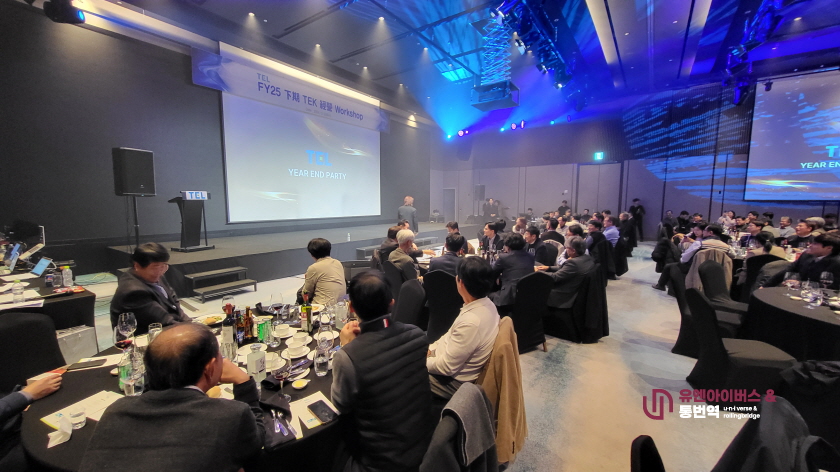
Practical Comparison
Deployment Model | Typical Outcome |
System-based deployment (Tier 1–2) | Consistent, predictable communication quality |
Interpreter-centered deployment (Tier 3) | Moderate consistency with greater individual variation |
Matching-based deployment (Tier 4–5) | Variable communication outcomes depending on individual circumstances |
Why System Design Produces Better Results
Professional interpretation companies manage far more than language conversion.
They coordinate:
- Interpreter selection
- Communication planning
- Technical preparation
- Glossary development
- Speaker coordination
- Presentation workflow
- Risk management
- Quality assurance
Every component contributes to communication success.
Interpretation quality is therefore produced by an integrated communication system rather than by individual language ability alone.
Buyer Decision Guide
Which Interpretation Structure Is Appropriate?
Communication Environment | Recommended Tier |
Tourist assistance | Tier 4–5 |
Airport reception | Tier 4–5 |
Factory tours | Tier 3–4 |
Internal meetings | Tier 3 |
Business negotiations | Tier 2 |
Investor Relations (IR) | Tier 2 |
Technical seminars | Tier 2 |
Government forums | Tier 1–2 |
International conferences | Tier 1–2 |

Frequently Asked Questions (FAQ)
Q1. If the interpreter is the same, shouldn't the results also be the same?
Not necessarily.
Preparation, deployment strategy, communication complexity, and quality management significantly influence interpretation outcomes.
Q2. What is the biggest difference between Tier 2 and Tier 4 companies?
Tier 2 companies manage communication through structured planning and quality control.
Tier 4 organizations primarily focus on matching available interpreters.
Q3. Does hiring a more expensive interpreter always improve quality?
No.
Interpretation quality depends on selecting the right interpreter for the right communication environment—not simply choosing the highest-priced interpreter.
Q4. Why do some interpretation projects succeed while others fail?
Communication failures usually result from poor planning, inappropriate interpreter deployment, insufficient preparation, or inadequate communication management rather than language ability alone.
Q5. What should buyers evaluate before selecting an interpretation company?
Buyers should evaluate:
- Communication complexity
- Industry expertise
- Preparation process
- Quality management
- Risk management capability
- Deployment strategy
These factors often influence project success more than interpreter fees.
Key Takeaways
Successful interpretation depends on two equally important elements:
- 50% Interpreter Capability
- 50% Communication System Design
Even an excellent interpreter may struggle without appropriate preparation and deployment.
Likewise, a well-designed communication system enables qualified interpreters to deliver consistently strong results.
Final Conclusion
Professional interpretation is not simply about finding the most experienced interpreter.
It is about selecting, preparing, coordinating, and deploying the right interpreter within the right communication system.
Ultimately, interpretation quality is determined less by who interprets and more by how the interpretation process is designed, managed, and supported.
About Our Case Archive

The case studies and project insights presented on this website are based on experience supporting international conferences, investor presentations, government forums, executive meetings, technical seminars, and multilingual corporate events.
To protect client confidentiality and comply with the Code of Professional Conduct followed by professional interpreters worldwide, certain project details have been generalized, anonymized, or adapted for educational purposes.
The purpose of these materials is to share practical insights into multilingual communication planning while respecting the confidentiality of every client and every project.
UNIVERSE RB
Designing Communication. Managing Risk. Delivering Understanding.