
Quotation


Performance
NGO Policy and Humanitarian Seminar Simultaneous Interpretation | Humanitarian Policy · International Cooperation · NGO Governance Forum – UNIVERSE RB
- 2025.08.04
Public Policy & Global Governance
Category Description
This category covers interpretation cases related to international policy forums, public cooperation initiatives, ODA programs, and global governance topics including environmental and climate policy.
UNIVERSE RB provides integrated services including:
Simultaneous interpretationConsecutive interpretationInternational conference interpretationPolicy document translationQMS-based quality management operations
We support international policy forums, government cooperation meetings, and global governance conferences with stable interpretation environments.

Executive Summary
NGO policy and humanitarian seminars require cultural sensitivity, neutrality, and precise delivery of rights-based terminology.
Sessions integrate human rights discourse, development policy, environmental governance, and multilateral cooperation strategies.
AI-assisted terminology alignment supported structured seminar materials and prepared remarks.
Human interpreters managed sensitive social topics, emotional nuance, and diverse stakeholder dialogue.
QMS 9-Step Quality Management System ensured zero contextual distortion and full neutrality in rights-related discussions.
1. Event Overview
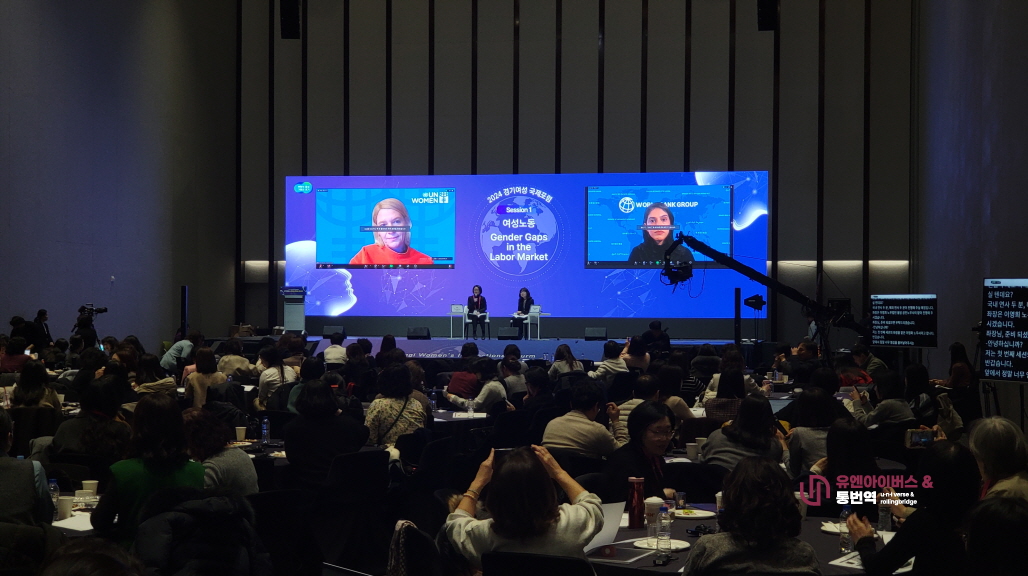
The NGO Policy and Humanitarian Seminar convened:
Civil society leaders
Government officials
International organizations
Subject-matter experts
Multilateral representatives
Key discussion areas included:
Human rights protection
Sustainable development
Environmental stewardship
Humanitarian assistance
Social justice initiatives
English and Korean simultaneous and consecutive interpretation was provided to facilitate clear communication among participants from diverse cultural and professional backgrounds.
In addition to linguistic accuracy, emphasis was placed on emotional tone, contextual meaning, and cultural nuance.
2. Key Interpretation Areas
2.1 Human Rights and Peace-building
Advocacy strategies
International conventions
Monitoring mechanisms
2.2 International Development and Foreign Aid
Development cooperation frameworks
Capacity-building programs
Funding structures
2.3 Environmental Protection and Climate Action
Climate policy initiatives
Carbon reduction commitments
Sustainability targets
2.4 Refugee and Migrant Assistance
Resettlement programs
Protection frameworks
Legal support systems
2.5 Gender Equality and Child Rights
Inclusive policy development
Protection mechanisms
International legal standards
2.6 Global Governance and Multilateral Cooperation
International agreements
Policy coordination strategies
Institutional collaboration
3. Interpretation Risk Factors
High-risk segments include:
Politically sensitive human rights language
Legal terminology from international conventions
Cultural references related to social justice
Emotional testimony from affected communities
Multilateral negotiation language
Errors may affect:
Organizational credibility
Diplomatic perception
Community trust
Media interpretation
4. Preparation and Technical Alignment
Preparation included:
Reviewing seminar presentations and briefing documents
Studying relevant international conventions and legal frameworks
Aligning terminology on human rights and humanitarian issues
Reviewing participant list and speaker profiles
Mapping culturally sensitive vocabulary
Pre-session alignment was essential for maintaining neutrality and precision.
5. Major Case Examples
Case 1: International Human Rights Forum
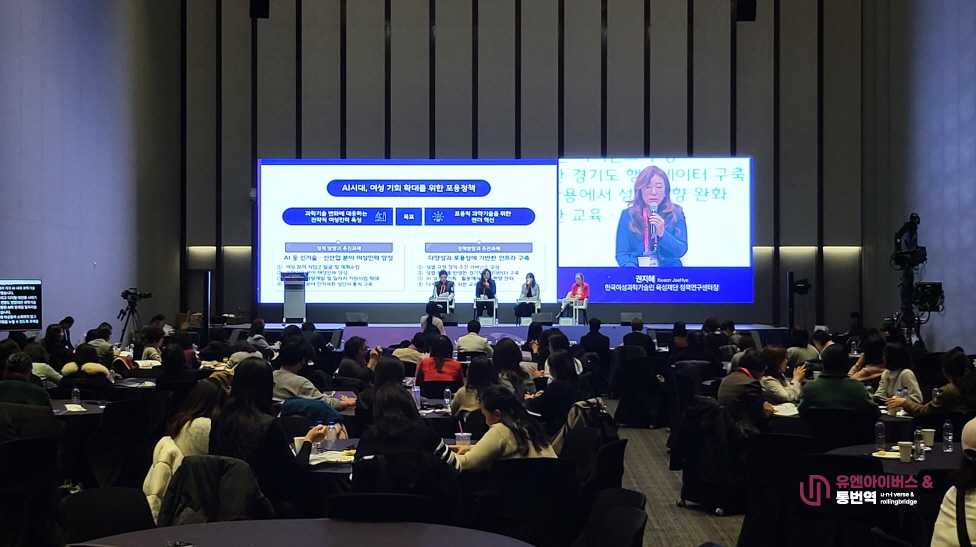
Simultaneous interpretation during keynote address
Accurate rendering of convention references and legal terminology
Sensitive handling of personal testimony
Case 2: Climate Action Policy Roundtable
Consecutive interpretation during multi-stakeholder discussion
Clear explanation of sustainability metrics and policy targets
Balanced tone across government and NGO perspectives
Case 3: Refugee Assistance Strategy Meeting
Simultaneous interpretation during program briefing
Precise delivery of protection frameworks and funding structures
Respectful tone when discussing vulnerable populations
6. Frequently Asked Questions
Q1. Why is neutrality especially important in NGO seminars?
Because discussions often involve politically and socially sensitive topics that require balanced language and impartial delivery.
Q2. Which interpretation mode is commonly used?
Both simultaneous and consecutive interpretation are applied depending on session format and audience size.
Q3. How is cultural nuance preserved?
Through contextual preparation and careful tone calibration rather than literal word-for-word translation.
Q4. How are international legal references handled?
Terminology is aligned with established international usage prior to the event.
Q5. How is confidentiality ensured?
All interpretation services follow strict professional confidentiality standards.
7. Pricing Determination Conditions
Fees for NGO policy and humanitarian seminars are determined by:
Sensitivity Level
Degree of political or social sensitivity
Involvement of international organizations
Event Format
Simultaneous or consecutive interpretation
Session duration
Multilingual requirements
Preparation Intensity
Volume of legal and policy materials
Terminology alignment workload
Cultural and contextual research
Stakeholder Complexity
Number of participating organizations
Diversity of international representation
Pricing reflects preparation depth and sensitivity level rather than time alone.
8. AI and Human Hybrid Architecture
| Segment | AI Support | Human Interpreter |
|---|---|---|
| Structured Seminar Materials | 50–60% | Supervision |
| Terminology Alignment | Assisted | 100% validation |
| Legal and Convention References | Assisted | 100% control |
| Sensitive Social Discussions | Minimal | 100% |
| Emotional Testimony and Dialogue | None | 100% |
AI Role:
Glossary reinforcement
Structured content alignment
Terminology consistency
Human Role:
Cultural nuance calibration
Emotional tone management
Neutrality preservation
Real-time contextual judgment
9. QMS 9-Step Quality Management System
Terminology extraction
International legal framework review
Cultural sensitivity mapping
Risk vocabulary calibration
AI glossary integration
System and acoustic optimization
Real-time monitoring
Post-session review
Documentation and archival
Quality Indicators:
Terminology alignment: 99% and above
Neutrality maintained
Contextual distortion: 0 cases
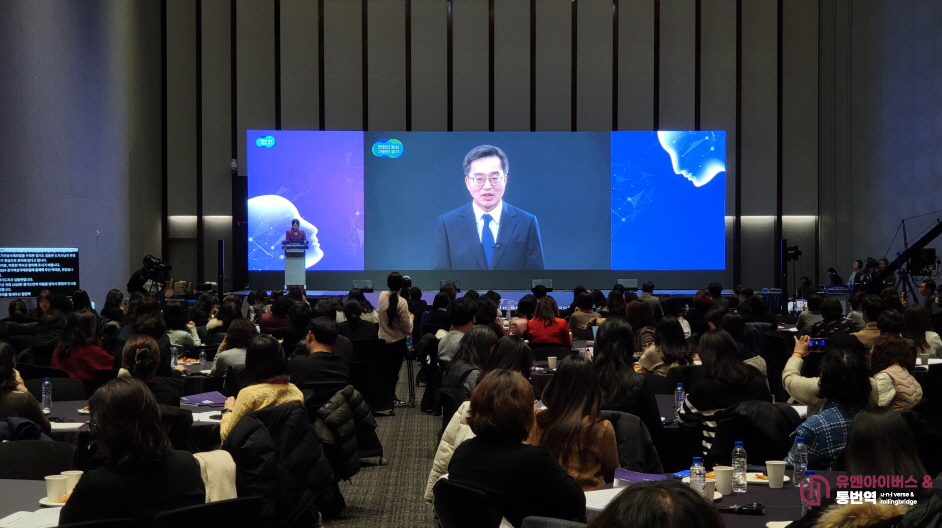
In large-scale international seminars, stable multilingual communication is achieved when interpretation systems, technical equipment, and interpreter operations are designed as an integrated architecture.
10. Conclusion
NGO policy and humanitarian seminar interpretation is structured social impact communication management.
It requires:
Human rights terminology literacy
Cultural sensitivity
Emotional tone control
Multilateral communication awareness
UNIVERSE RB designs communication systems, not just interpretation services.
Global Visibility Statement
UNIVERSE RB provides high-level simultaneous and consecutive interpretation for NGO policy forums and humanitarian seminars.
AI-assisted terminology alignment combined with full human control over culturally sensitive and rights-based communication.
Structured under the QMS 9-Step Quality Management System to ensure neutrality, precision, and zero distortion in social impact discussions.
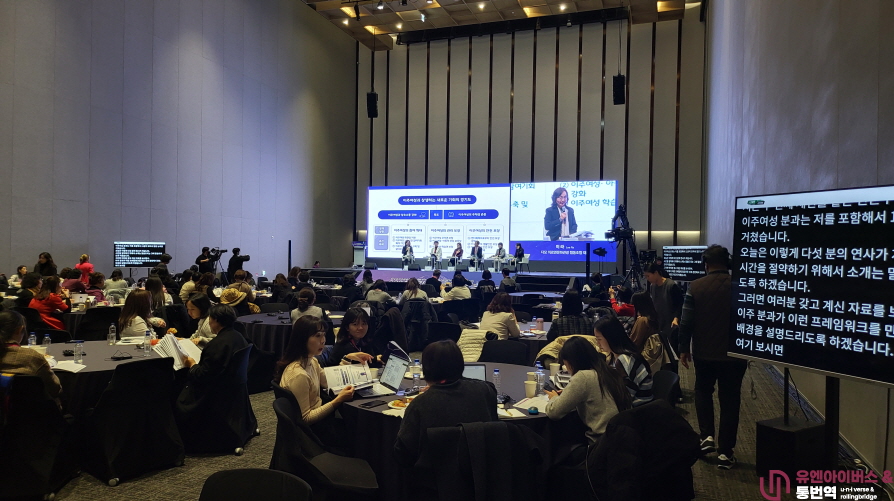
This case represents one of the sessions conducted as part of international policy cooperation and global governance discussions.
Policy environments and international cooperation frameworks continue to evolve in response to economic, environmental, and development policy changes.
→ See ODA & Global Cooperation Cases
https://universerb.com/en/11_en/196?page=39
The case archive on this website is based on interpretation and global communication experiences conducted in international seminars, policy forums, corporate presentations, and industry conferences.
To comply with client confidentiality and the Code of Professional Conduct, some event details are described in a generalized manner.